
Your accounting research report topic proposal cited three IFRS sources you haven’t finished reading, the literature review synthesis is due Friday, and using AI wrong here doesn’t just cost marks — it can trigger a misconduct case that follows you into your CA(SA) training contract application. What a real South African university’s own AI guidelines actually say, and a workflow that keeps the analysis, the figures and the conclusions honestly yours.
The honest fix is not avoiding AI entirely — it is using it for the parts that carry no integrity risk (structure, clarity, understanding a standard) while keeping every number, citation and conclusion verified and genuinely your own, disclosed exactly as your department requires. Tesify is built around that same line: a structuring and drafting tool that keeps you, not the AI, as the author of record.
What a real South African university policy actually says
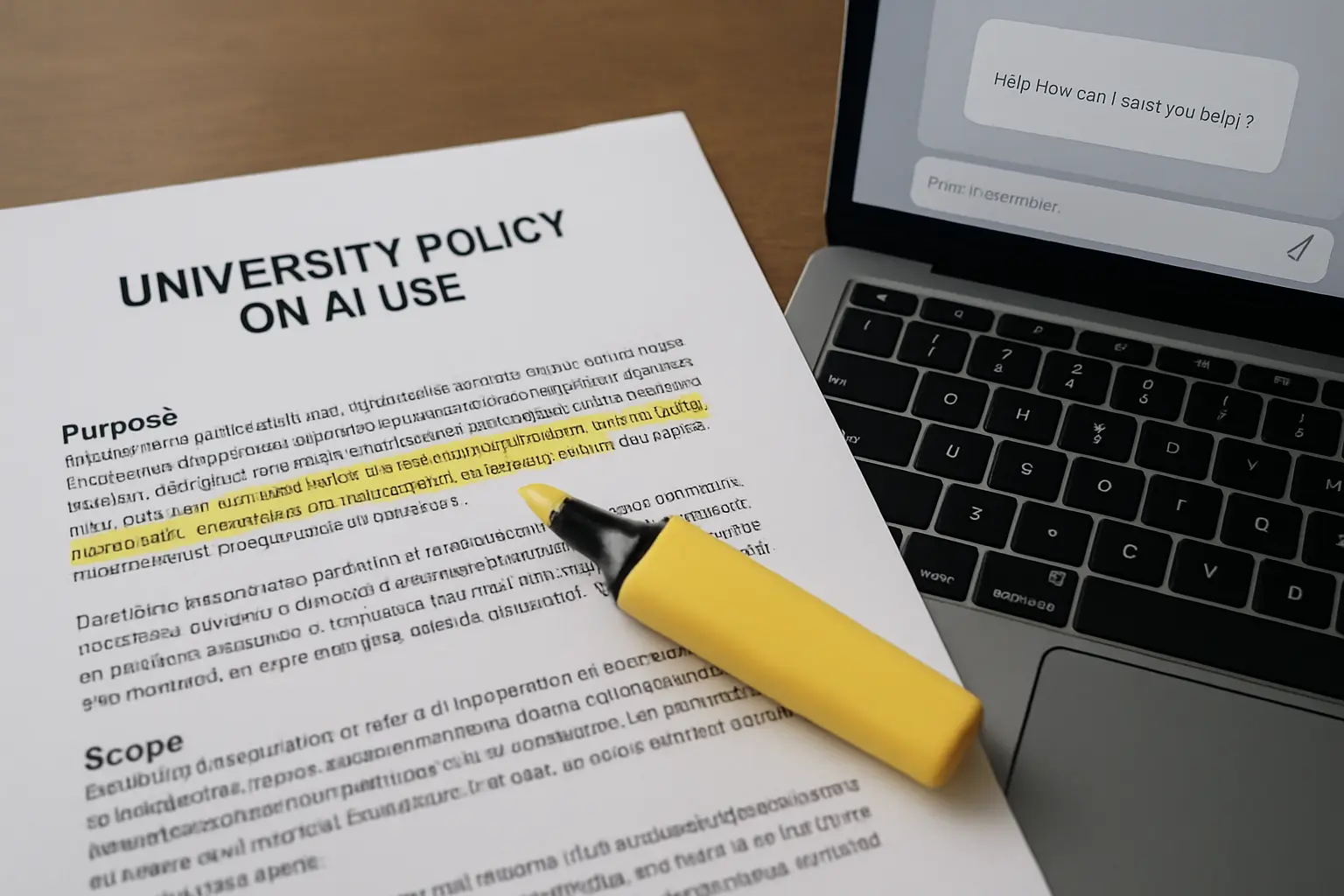
Stellenbosch University’s own draft interim guidelines on AI use and academic integrity set out four principles for responsible AI use: accountability — “AI tools don’t have accountability,” so the student remains responsible for what is submitted; authenticity — the work must remain genuinely the student’s own; fairness — every student should have an equal chance regardless of AI access; and transparency — AI use must be disclosed, not hidden. The guidelines offer lecturers and departments three options for any given assessment: allow AI use with a required declaration, disallow it (while noting there is no fully reliable way to detect this), or require it with a declaration. Whichever option your own department applies to the accounting research report, a written declaration of what AI tools you used, for what, and why, is the common thread — “you are responsible for what you create and how it impacts others and society,” as the guidelines put it.
Where AI genuinely helps an accounting research report
Structuring the literature review around your chosen IFRS standard or audit topic, drafting an outline of the methodology chapter before you fill in your own analysis, checking your own writing for clarity, and helping you understand a technical accounting standard in plainer language before you write about it in your own words — these are legitimate, low-risk uses that most policies, including Stellenbosch’s, treat as compatible with academic integrity when declared.
Where AI is genuinely dangerous in accounting research
Never let an AI tool generate financial figures, ratios or analysis results and present them as your own calculated data — accounting research is judged specifically on the accuracy of its numbers, and a fabricated or AI-hallucinated figure in a results chapter is both an academic integrity failure and, in a discipline that trains future auditors, a professional-ethics failure in miniature. Never ask AI to write your interpretation of a company’s financial statements and submit it without independently verifying every number against the actual source document (the annual report, SENS announcement, or JSE filing) yourself. And never let AI generate case citations, IFRS paragraph references, or King IV clause numbers you have not personally opened and checked — a fabricated citation is exactly the kind of error a careful marker or examiner catches immediately, and one of the most common ways AI-assisted academic writing goes wrong across every discipline, not only accounting.
A safe workflow for an accounting research report
1. Do your own primary reading of the IFRS standard, King IV provision, or audit topic first — do not start with an AI summary. 2. Use AI, if your department permits it, to help structure your literature review or outline your methodology chapter, not to write the substantive content. 3. Perform your own financial analysis and calculations directly from the source data, in your own spreadsheet or statistical software. 4. Where AI helped with structure, phrasing or understanding, declare it explicitly per your department’s requirement, naming the specific tool and task. 5. Verify every citation, IFRS reference and financial figure against the primary source before submission — treat this as a non-negotiable final pass, not an optional check.
What actually happens if you get this wrong?
South African universities treat undisclosed AI use in submitted academic work as a potential plagiarism or academic-dishonesty matter, handled through the same disciplinary process as any other form of unattributed work — a finding against a student can range from a mark penalty to, in serious or repeated cases, suspension. For an accounting student specifically, a misconduct finding on record is also a disclosure question at the SAICA training-contract application stage and, later, at professional registration — the practical stakes here go beyond a single module mark. This is precisely why disclosure, not avoidance, is the safer strategy: a declared, policy-compliant use of AI for structure or clarity is not a violation; an undeclared use, discovered later, is treated far more seriously than the underlying AI use itself would have been.
A realistic scenario: where the line actually sits
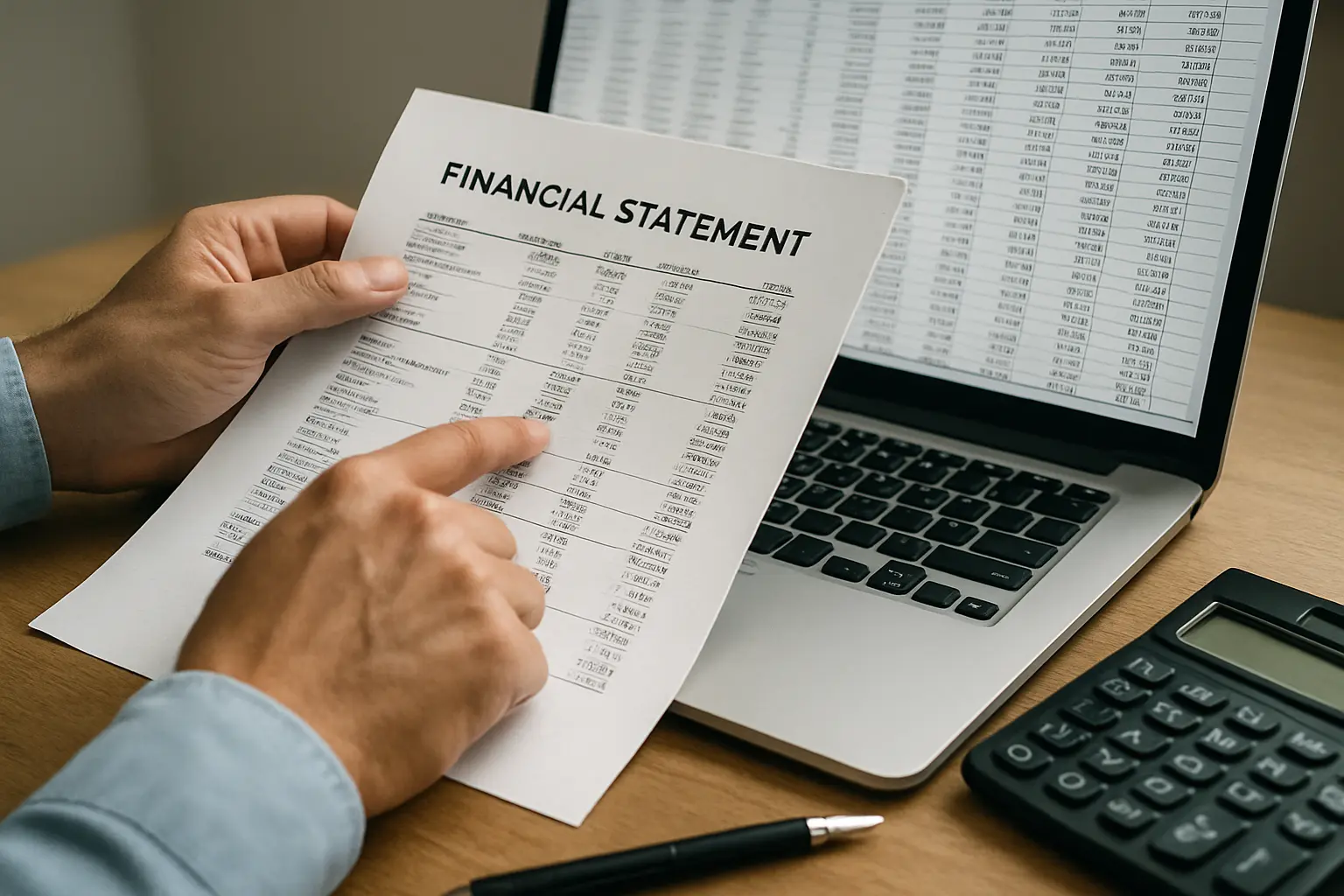
Consider a student under deadline pressure who asks an AI tool to “summarise the key IFRS 15 revenue recognition criteria for my literature review.” Using that summary to understand the standard faster, then writing the literature review section in their own words with their own citations to the actual IFRS text, sits on the safe side of the line described above — provided it is declared per their department’s policy. Asking the same tool to “write me a paragraph analysing how Company X applied IFRS 15 in their 2025 annual report” and submitting the output with invented or unverified figures sits firmly on the dangerous side — the analysis has not been performed by the student, and any number in it is unverified until independently checked against Company X’s actual published annual report — the difference between the two examples is not the tool used, but whether the student’s own verified judgement sits behind every figure and conclusion.
What does the accounting profession’s own ethics code say about this?
SAICA members and trainees operate under a professional code of ethics requiring integrity, objectivity and professional competence — principles that predate AI but apply directly to it: presenting AI-generated analysis as your own verified work, without disclosure, sits uneasily with the same integrity standard that will govern your professional conduct once articled. This site could not confirm a SAICA-specific published AI policy for student research at the time of writing — check SAICA’s own current guidance directly, since professional-body policy in this area is likely to develop further.
How does this compare to the generic AI-citation guidance on this site?
The site’s own guide to citing ChatGPT and AI in a South African dissertation covers the citation mechanics — the APA 7 form, what a declaration should contain — that apply regardless of your field. This article covers the accounting-specific judgement calls: which uses are safe (structure, clarity) and which are dangerous specifically because of what accounting research is judged on (verified, accurate financial figures and interpretation).
How does this connect to the rest of your research report?
An AI-use declaration is one part of a research report’s overall integrity, alongside a properly structured analysis method and honestly reported results — the same discipline that governs every other chapter applies here too: state your method, follow it, and disclose anything that shaped the outcome. A report with a clean AI declaration but a fabricated data source, or a genuine data source but an undisclosed AI-generated analysis, both fail the same underlying integrity standard from different directions.
What about group assignments or peer-reviewed drafts?
Where a research report component involves peer feedback or a study group, the same disclosure principle extends — if a peer used AI to help draft comments they gave you, that is a layer of AI involvement in your own work you may not be aware of. Ask directly rather than assuming a peer’s feedback is entirely AI-free, and keep your own declaration focused on what you yourself used, which is the part actually within your control and the part your own supervisor or examiner will actually be assessing.
What does a declaration actually need to say?
Based on Stellenbosch’s own guidance, a workable declaration names the specific AI tool used, states specifically what it was used for (for example, “used to structure the literature review outline; all content independently written and verified”), and confirms that the substantive analysis and conclusions are the student’s own. Keep a record of your AI interactions (prompts and outputs) in case your department asks for it — this is good practice regardless of whether your specific department requires it upfront.
Writing an accounting research report this rigorously, with every figure verified and every source checked, is exactly what Tesify is built to support — it helps you structure and draft in the order examiners expect, while every number, every citation and every conclusion stays entirely your own, verified work.
Frequently asked questions
Can I use AI to write my accounting research report’s introduction?
Check your department’s specific policy — many treat AI-assisted structuring and drafting of lower-stakes sections (an introduction, for instance) differently from the results and analysis chapters, but disclosure is the common requirement across most policies regardless of section.
Will AI detection software catch me if I use it without declaring?
Current AI detection tools are not fully reliable, and most South African university policies, including Stellenbosch’s draft guidelines, explicitly note this rather than relying on detection as an enforcement mechanism — the safer, and more professionally appropriate, path is disclosure rather than betting on non-detection.
Does Tesify write accounting content for me?
Check Tesify’s current product pages for exactly what each plan includes — this article does not assert a specific feature set or price beyond what you can confirm directly on Tesify’s own site.
Can I use AI to check my IFRS or King IV citations are correctly formatted?
Formatting checks are lower-risk than content generation, but always verify the underlying citation is accurate against the primary source — an AI tool can format a reference correctly while still getting the paragraph number or edition wrong.
What if my supervisor hasn’t specified an AI policy for the research report?
Ask directly rather than assuming — in the absence of explicit guidance, default to the most conservative reading (disclose any AI use, verify everything independently) and confirm before you rely on it for anything beyond structure and clarity checks.
Can I use AI to generate practice exam questions while studying alongside my research report?
This is a different use case from the report itself and generally carries lower integrity risk, but check whether your specific module or professional-training context has its own guidance on AI-assisted study materials.
Does declaring AI use make my research report look weaker to examiners?
No — a transparent, policy-compliant declaration signals exactly the kind of professional honesty the accounting profession expects; the risk sits with undisclosed use, not with disclosed, well-scoped use.