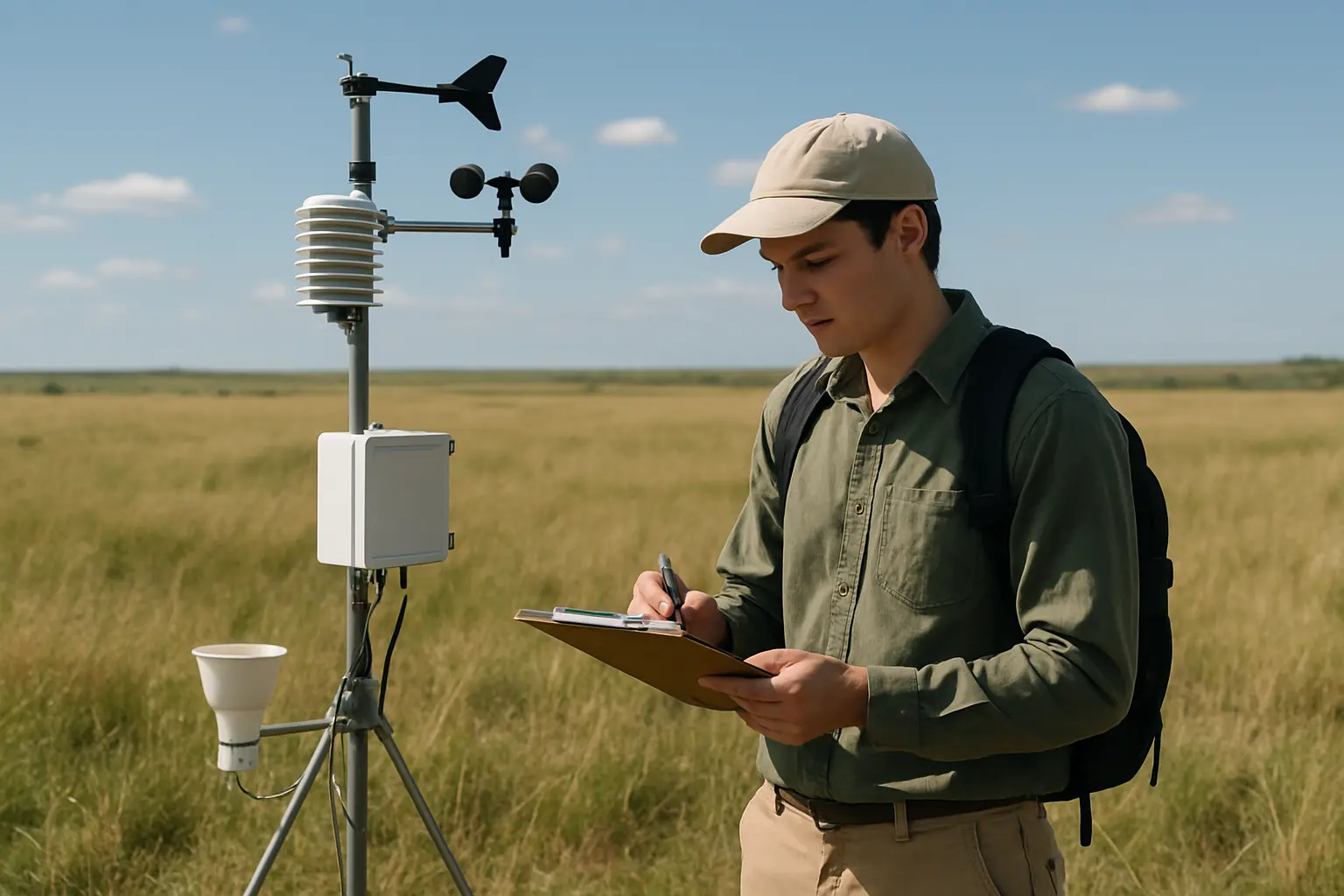
DFFE oversees national environmental policy and data, SAEON runs the long-term observation stations and open data platform researchers actually pull from, and SANBI holds the country’s biodiversity mandate — three different custodians, three different jobs, and no single portal that combines all three.
| Source | Custodian | What it covers | Access |
|---|---|---|---|
| SAEON Open Data Platform | South African Environmental Observation Network (NRF facility) | Long-term environmental observation data — weather stations, terrestrial, freshwater, coastal and marine monitoring | Public data catalogue, searchable online |
| SANBI biodiversity data and information | South African National Biodiversity Institute | Biodiversity data, species information, national botanical and zoological garden records | Public access via SANBI’s own site; specific portal terms vary — confirm current access route |
| DFFE environmental data and reports | Department of Forestry, Fisheries and the Environment (DFFE) | National environmental policy, State of Environment reporting, air quality, biodiversity conservation, waste management, ocean governance | Public reports and data via DFFE’s own site |
| South African Weather Service (SAWS) | SAWS | Weather and climate data | Some data free; SAWS charges for many specific data requests — confirm cost before relying on it |
| Department of Water and Sanitation (DWS) | DWS | Water resource data, water quality monitoring | Public via DWS’s own data portals |
What does DFFE actually publish, and what is it?
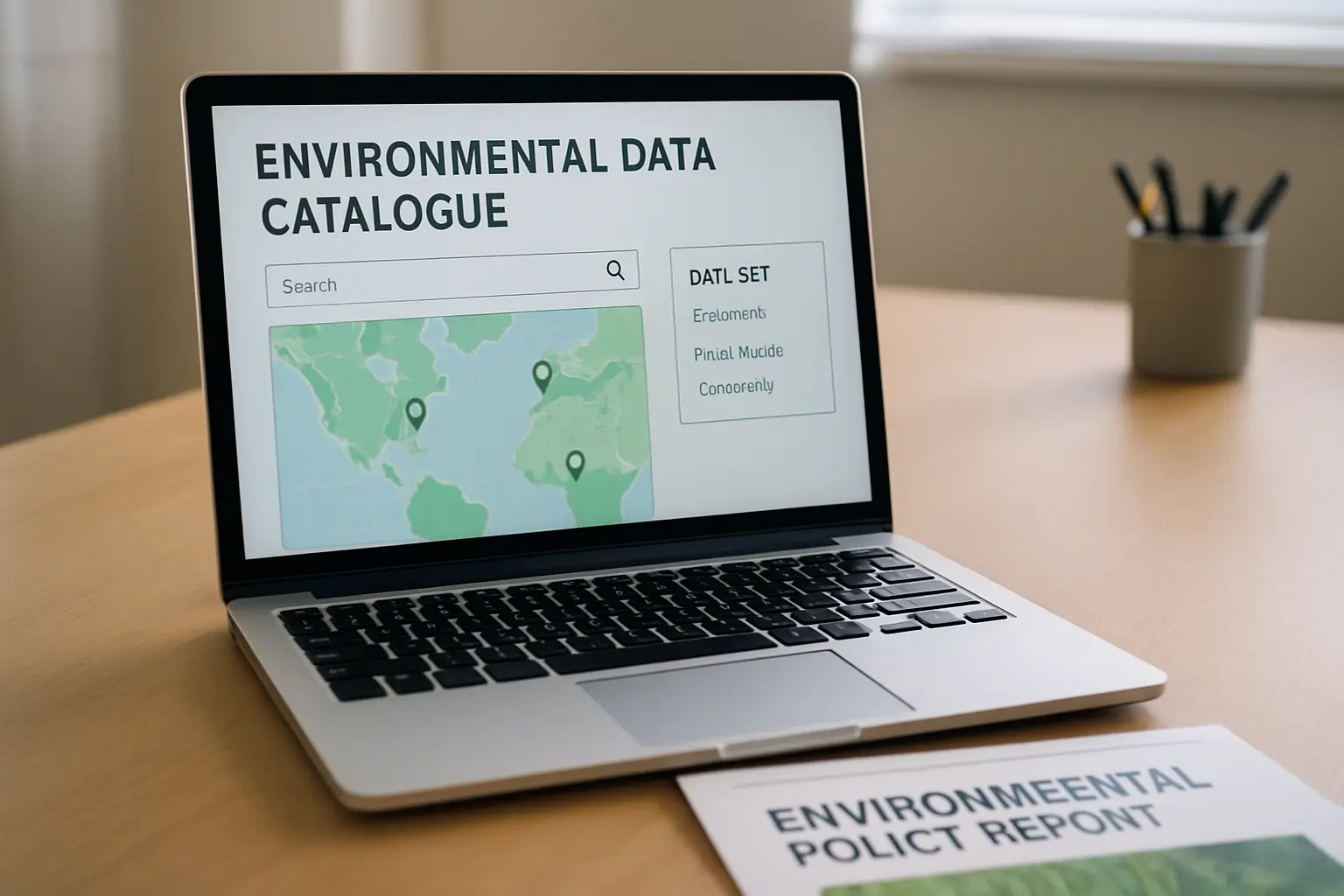
DFFE — the Department of Forestry, Fisheries and the Environment — was created in 2019 through the merger of the former Department of Environmental Affairs with the forestry and fisheries functions of the former Department of Agriculture, Forestry and Fisheries. Older sources and some still-live web pages refer to its predecessor as “DEA” (Department of Environmental Affairs) — use DFFE, the current name, in any dissertation written in 2026. DFFE publishes environmental policy documents, State of Environment-type reporting, and data across its operational branches, which include air quality, biodiversity conservation, waste management and ocean governance — a dissertation on any of these specific areas should check the relevant branch’s own publications rather than assuming a single unified DFFE dataset covers all of them.
What does SAEON’s data platform actually contain?
SAEON — the South African Environmental Observation Network — operates as a long-term environmental observation and research facility of the National Research Foundation, running research infrastructure across freshwater, terrestrial, coastal and marine environments, plus a national network of automated weather stations. Its Open Data Platform gives researchers access to a searchable data catalogue drawn from this observation network — this is the more research-oriented, ongoing-monitoring counterpart to DFFE’s policy-and-reporting role, and the more likely first stop for a dissertation needing actual time-series environmental observation data rather than policy documents.
What does SANBI actually provide?
SANBI — the South African National Biodiversity Institute — holds the national mandate for facilitating access to biodiversity data, generating biodiversity information and knowledge, and conserving biodiversity through South Africa’s national botanical and zoological gardens. The names, coverage and access terms of the specific public biodiversity databases SANBI operates (such as species-occurrence or ecosystem-status portals) change over time — before designing a study around a specific SANBI dataset, visit SANBI’s current site directly and confirm the exact portal name, coverage and access terms rather than assuming a specific tool exists in the form you expect.
What about weather and climate data specifically?
The South African Weather Service is the national meteorological authority, but not all of its data is free — SAWS charges for many specific data requests beyond what is published on its public-facing pages, a distinction that is easy to miss when a proposal simply assumes national weather data costs nothing. Confirm the specific cost, if any, for the specific data product your study needs before building a budget-free assumption into your proposal. SAEON’s own weather station network is a genuinely free alternative for many research purposes, where its station coverage matches your study area.
What about water-related environmental data?
The Department of Water and Sanitation publishes water resource and water quality data through its own portals — relevant for environmental science dissertations studying catchment health, water quality trends, or resource management. As with the other sources here, confirm the specific portal’s current URL and data format directly, since government data-portal structures change periodically.
How does this compare to data sources in other fields on this site?
The same discipline applies here as in the site’s guide to computer science dissertation data sources: name the specific custodian, the specific dataset or portal, and confirm the exact access route before finalising a proposal built around it. Environmental science has a particular version of this problem — several plausible-sounding national bodies exist (DFFE, SAEON, SANBI, DWS, SAWS), and a study naming “government environmental data” without specifying which of these five, and which specific dataset within it, is a common reason committees ask for a more precise data-source section before approving a proposal — the fix is usually a single added sentence per source naming exactly what will be pulled from it.
How current and how granular is each source?
SAEON’s observation network updates on an ongoing basis from its automated stations, making it a genuine option for a study needing recent or near-real-time data, subject to the specific station’s location matching your study area. DFFE’s policy and State of Environment-type reporting is typically published on a periodic cycle rather than continuously, so check the publication date of any specific report before treating it as current. Neither source guarantees fine-grained local coverage — SAEON’s stations are sited at specific research infrastructure locations, not evenly across the whole country, so confirm a station actually exists near your study site before designing a project around it, and build a fallback into the proposal (a nearby alternative station, or a primary field-measurement plan) in case the ideal station’s data proves incomplete for your exact period of interest.
What about climate-change and sustainability-specific data?
A dissertation framed through a climate-change, sustainability or environmental-justice lens draws on the same core sources above, but typically also needs sector-specific data — energy-sector emissions data from the relevant regulator, or municipal-level climate adaptation plans, for example — which sit outside DFFE, SAEON and SANBI’s direct remit. Identify the specific additional custodian for your sector early, since a climate-focused environmental science dissertation often needs to combine environmental observation data with an economic or policy dataset from a different government department entirely — Statistics South Africa’s environmental-economic accounts are one such cross-departmental source worth checking for a study with a resource-economics angle.
How does this connect to your dissertation’s methodology chapter?
Whichever combination of sources you use, the methodology chapter should state the specific dataset name, the custodian, the access date, and any known limitation (station coverage gaps, reporting lag, a paywall for part of the data) — an examiner checking this section wants to see that you understand what the data can and cannot support, not just that you found a plausible-sounding government source. A study that names its data limitations explicitly in the methodology chapter, rather than only in the limitations section at the end, tends to read as more methodologically careful throughout — the same instinct that produces strong research objectives earlier in the proposal, where precision about what the study will and will not measure is rewarded over broad, unscoped ambition.
What if your study needs primary environmental sampling instead?
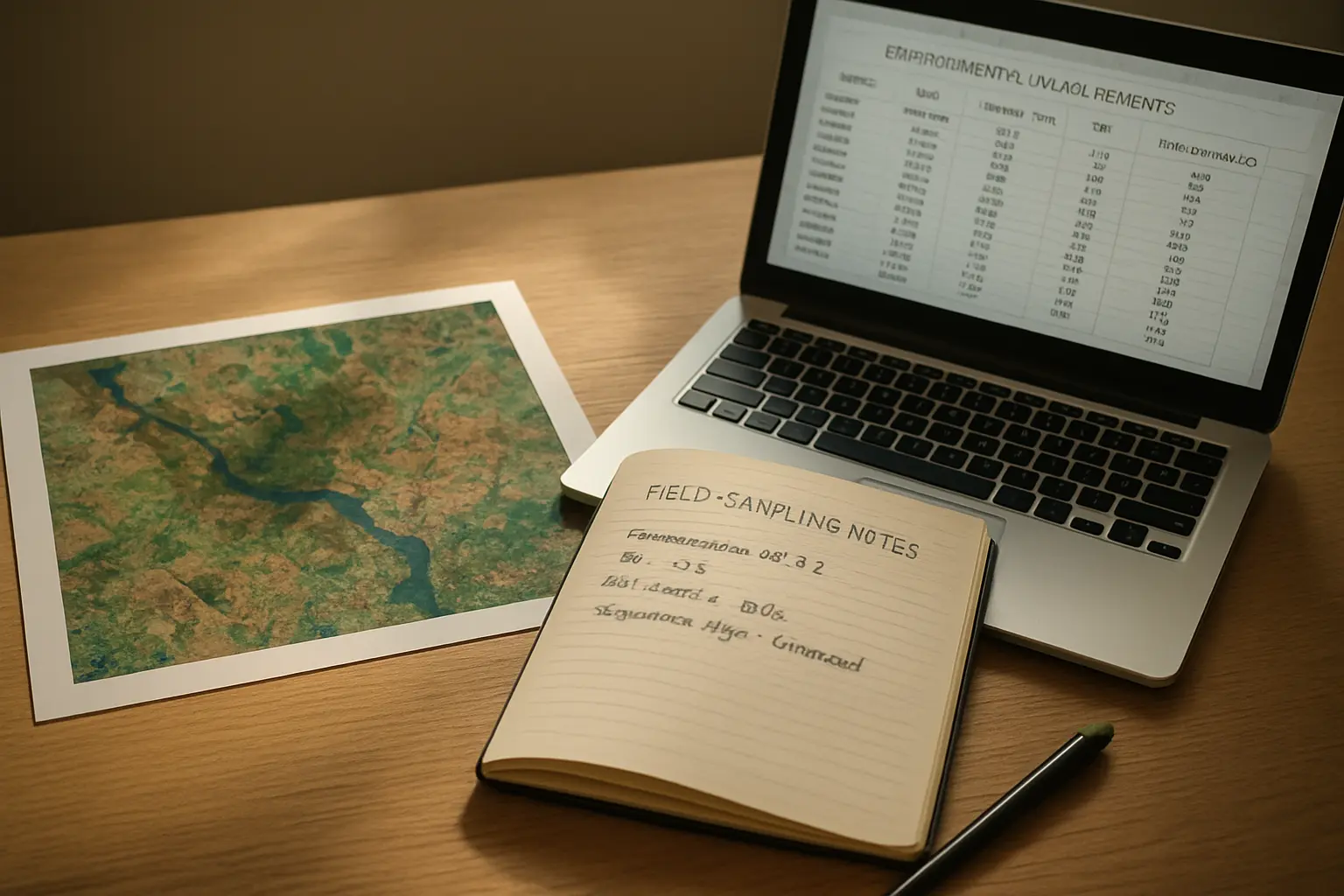
Not every environmental science dissertation can be built entirely on existing datasets — soil, water or air quality sampling at a specific site, for example, requires a primary field data-collection design with its own research ethics clearance and, depending on the site, landowner or municipal permission. Where existing DFFE, SAEON or DWS data covers your study area at the resolution and time period you need, using it saves fieldwork time; where it does not (a specific small catchment with no monitoring station, for example), primary sampling becomes the only realistic route, and the proposal should say so explicitly rather than assuming secondary data will suffice.
Naming and confirming the exact data source before the proposal is finalised is exactly the kind of structural discipline Tesify helps enforce, while the fieldwork, the analysis and the conclusions remain entirely your own.
Frequently asked questions
Is DFFE the same body some older sources call “DEA”?
Yes — DEA (Department of Environmental Affairs) was the predecessor name before the 2019 merger that created DFFE. Use DFFE, the current name, in any 2026 dissertation, and note the name change if citing an older source that used DEA.
Is SAEON’s data genuinely free?
SAEON’s Open Data Platform is described as public and searchable, operating under SAEON’s own data policy and open data principles — confirm the specific licence terms for your intended use on SAEON’s own site, since “public” and “free for any use including redistribution” are not always identical.
Do I need to request access to SANBI’s biodiversity data, or is it public?
This varies by the specific dataset — confirm directly on SANBI’s current site, since the names and access terms of its individual portals change over time.
Can I combine DFFE, SAEON and SANBI data in one dissertation?
Yes, where each source’s specific data genuinely serves a different part of your research question — for example, DFFE policy documents for the regulatory context, SAEON observation data for the environmental trend, and SANBI biodiversity data for the species dimension. Name each source and its specific role in the methodology chapter rather than treating them as interchangeable.
Is there a cost to accessing South African Weather Service data?
Some SAWS data is published free; other specific data products carry a cost — confirm the exact terms for your specific request directly with SAWS before assuming either way.
Can I use satellite or remote-sensing data instead of these national sources?
Yes — international satellite data providers (such as NASA’s Earthdata or the European Space Agency’s Copernicus programme) are free and widely used for South African environmental studies alongside national ground-station data, particularly for land cover, vegetation and large-area monitoring where ground stations are sparse. Confirm the specific product’s resolution and coverage suit your study area before committing to it, and note in your methodology chapter which processing level of the satellite product you used, since raw and pre-processed versions of the same dataset can differ meaningfully for analysis purposes.
Do I need permission to publish maps built from DFFE or SAEON data?
Check each source’s specific terms of use — most public government and research-facility data permits academic use with attribution, but confirm the exact citation requirement on the source’s own site rather than assuming a blanket permission applies.
How do I cite a dataset rather than a published report?
Most South African university Harvard guides expect a dataset citation to include the custodian organisation as author, the dataset name, the year, and the access date or URL — check your own department’s guide for the exact format, since dataset citation conventions vary more between departments than book or journal citation conventions do, and getting it wrong is an easy, avoidable deduction.