
South African pharmacy dissertations most often draw on two national regulators’ own public registers — SAHPRA’s medicines database and the South African Pharmacy Council’s practitioner register — rather than on a single national pharmacy-research dataset, because no such single dataset exists.
| Source | Custodian | What it covers | Access |
|---|---|---|---|
| Registered Health Products database | SAHPRA | Registered medicines, biologicals, complementary medicines, medical devices | Public, searchable online |
| Adverse Event Reporting / Report Side Effects | SAHPRA | Reported adverse drug events and safety signals | Public reporting portal; aggregate data on request |
| Product Recalls database | SAHPRA | Recalled products supplied in South Africa | Public, searchable online |
| Pharmacist and pharmacy premises register | South African Pharmacy Council (SAPC) | Registered pharmacists, pharmacy support personnel and licensed pharmacy premises | Public register (verification search) |
| National Health Laboratory Service data | NHLS | Laboratory and surveillance data used in public-health and clinical research | Request-based, via NHLS or the relevant research unit |
| PubMed / Cochrane Library | US National Library of Medicine / Cochrane | International pharmacy and pharmacology literature, systematic reviews | Free (PubMed); Cochrane summaries free, full reviews may need institutional access |
Where do most South African pharmacy dissertations actually get data?
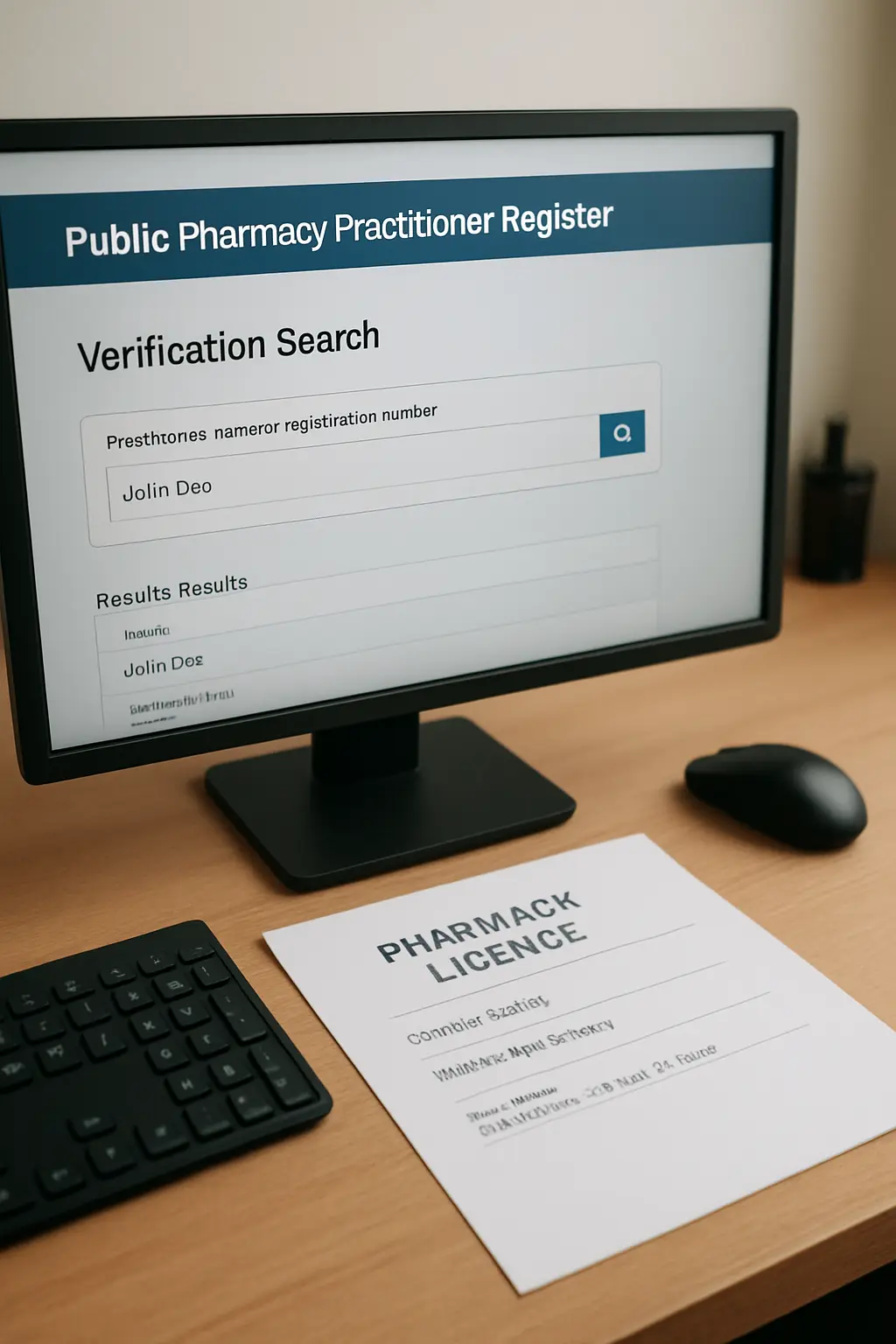
Three sources cover the bulk of pharmacy dissertation designs. For drug-regulatory or medicines-availability studies, SAHPRA’s own registers (the Registered Health Products database, the adverse event portal, the recalls database) are the primary public source — all three are searchable directly on SAHPRA’s site without a data request process. For studies about the pharmacy workforce or pharmacy premises distribution, the South African Pharmacy Council’s public register verifies registration status and can support workforce-distribution analysis when combined with other public data. For clinical or pharmacological studies drawing on existing literature, PubMed and the Cochrane Library remain the standard international sources, alongside SAMJ (the South African Medical Journal) for locally published clinical research.
What does SAHPRA’s Registered Health Products database actually contain?
SAHPRA (the South African Health Products Regulatory Authority) maintains a public, searchable database of registered health products, covering biologicals, blood products and vaccines, complementary medicines, clinical trials, medical devices and veterinary medicines. A dissertation studying medicine availability, generic substitution, or registration timelines for a specific therapeutic category can use this register directly rather than requesting data from SAHPRA — check the database’s own search interface for the fields it actually exposes (registration date, product category, applicant) before designing a study around fields it may not provide.
What does the SAPC register cover, and what does it not?
The South African Pharmacy Council, established under the Pharmacy Act 53 of 1974, regulates pharmacists, pharmacy support personnel and pharmacy premises — its public register lets you verify an individual’s or a premises’s registration status, which supports studies on pharmacy distribution, workforce numbers by category, or premises licensing patterns. It is a regulatory register, not a research dataset with demographic or practice-pattern detail built in — a study needing that additional depth (working hours, patient volumes, scope-of-practice variation) will need a primary survey or interview design rather than relying on the register alone.
What about adverse-event and pharmacovigilance data?
SAHPRA operates a public adverse-event reporting portal, including a dedicated COVID-19 adverse events report during that period — a pharmacy dissertation studying medicine safety signals, reporting patterns, or pharmacovigilance system performance can draw on this data, though aggregate or de-identified extracts for research purposes typically require a direct request to SAHPRA rather than being fully downloadable from the public portal. Build this request into your project timeline early, since regulatory data requests can take weeks to process.
What about hospital or community pharmacy practice data?
A study auditing dispensing patterns, medication-error rates, or patient counselling practices at a specific hospital or community pharmacy needs a primary data-collection design (record review, observation, or a staff survey) at that specific site, with the site’s own gatekeeper permission secured before data collection — no national database substitutes for site-level practice data. Where a study wants to generalise beyond a single site, a multi-site design with each site’s own permission, or a published national survey if one exists for the specific practice area, are the two realistic routes; assuming a single site’s findings generalise nationally without either route is a common overreach examiners flag in the discussion chapter, alongside a limitations paragraph naming this constraint directly rather than glossing over it.
What free statistical and reference tools pair well with these data sources?
Once data is extracted from SAHPRA’s or SAPC’s public registers, standard spreadsheet tools (Excel, Google Sheets) are usually sufficient for the descriptive-statistics stage of a pharmacy dissertation working with regulatory register data, since these registers are typically not large enough to need specialist big-data tools. For a systematic review drawing on PubMed and Cochrane, reference-management software (see the site’s own comparison of reference managers for South African postgraduate students) keeps the screened-and-included literature organised through the PRISMA-style selection process most pharmacy systematic reviews now follow.
Where does clinical and pharmacological literature come from?
PubMed remains the standard free starting point for international pharmacy and pharmacology literature searches, and the Cochrane Library is the standard source for systematic reviews and meta-analyses of drug efficacy and safety — Cochrane’s plain-language summaries are free, though full systematic reviews sometimes require institutional or Cochrane library access, so check what your university library provides before assuming a paywall blocks access entirely. For South African-specific clinical research, SAMJ and the South African Family Practice journal are commonly cited local sources.
What about NHLS data for a pharmacy dissertation?
The National Health Laboratory Service holds laboratory and surveillance data relevant to pharmacy-adjacent research — antimicrobial resistance patterns, for example, which matter directly to pharmacy practice and antibiotic stewardship research. Access is generally request-based through NHLS or the relevant surveillance programme rather than a public download, and turnaround time should be planned for in the project timeline rather than assumed to be immediate.
How current does the data need to be?
SAHPRA’s registers are updated on an ongoing basis as products are registered, recalled or have their status changed, so a search performed close to submission reflects the current register rather than a fixed historical snapshot — state the exact date you accessed the data in your methodology chapter, since the register’s contents can genuinely change between when you searched it and when an examiner might check it. For a study specifically about a trend over time (registration volumes by year, for example), confirm whether the database’s search interface exposes historical filtering, or whether you will need to record snapshots at intervals yourself.
What should a pharmacy dissertation proposal name explicitly?
At proposal stage, name the specific source (not just “SAHPRA” but the specific register within SAHPRA’s site), the specific fields you intend to extract, and the specific access route (direct public search versus a formal data request). A proposal that names only “regulatory data” without this level of specificity is a common reason committees ask for revision before approving data collection — the same discipline the site’s general guide to writing a research proposal recommends applies with particular force to pharmacy studies, where several plausible-sounding but not fully public data sources exist.
What about international comparison data?
Where a pharmacy dissertation compares South African medicine registration, pricing or availability against another country, the WHO’s own public databases (the WHO Essential Medicines List, and WHO’s Global Health Observatory) are commonly used international comparison points, alongside the specific national regulator of the comparison country (the FDA for the United States, the EMA for the European Union). Confirm that the comparison is genuinely like-for-like — regulatory categories, product classifications and reporting timelines differ between jurisdictions, and a naive comparison across these differences is a common source of overstated findings.
What data does NOT exist at a single national source?
There is no single South African national dataset of pharmacy dispensing volumes, prescribing patterns across the whole health system, or patient-level medicine-use data — this data sits with individual medical schemes, pharmacy retail groups, or the National Department of Health’s own systems, each with its own access process, and none is uniformly public. A dissertation proposing to use “national dispensing data” without having identified and confirmed access to a specific custodian is, at proposal stage, describing a data source that does not yet exist in an accessible public form — name the specific custodian and confirm access before committing the design to it.
How does this connect to your research design?
Match the data source to the research question at proposal stage, the same discipline the site’s guide to computer science dissertation data sources recommends for a different field — confirm the specific source, its access route and its actual fields before the proposal is finalised, not after data collection is meant to begin. A regulatory register like SAHPRA’s or SAPC’s answers “what is registered” questions well; it does not answer “how patients actually use medicines” questions, which need a primary data collection design instead.
Structuring a pharmacy dissertation around data sources that genuinely exist and are genuinely accessible is exactly the kind of proposal-stage discipline Tesify helps enforce, while the sourcing, the analysis and the conclusions remain entirely your own.
Frequently asked questions
Is SAHPRA’s database free to use for a dissertation?
Yes — the public-facing search interfaces (registered products, recalls, OTC directory) are free to search directly; a bulk data request for research purposes may involve a separate process with SAHPRA, so confirm the exact terms for your intended use.
Can I get patient-level prescribing data for my pharmacy dissertation?
Generally not from a single public national source — patient-level dispensing or prescribing data sits with individual medical schemes, retail pharmacy groups or specific health facilities, each requiring its own data-sharing agreement and ethics approval.
Is the SAPC register the same as SAHPRA’s database?
No — SAPC regulates pharmacists, pharmacy support personnel and pharmacy premises; SAHPRA regulates the medicines and health products themselves. A workforce-distribution study needs SAPC data; a medicine-registration or safety study needs SAHPRA data.
Do I need ethics approval to use SAHPRA’s public registers?
Using publicly available aggregate register data generally raises fewer ethics concerns than primary data collection involving people, but confirm your specific department’s requirement — some ethics committees still expect a data-source declaration even for secondary public data.
Where can I find South African-specific medicine-pricing data?
The Department of Health publishes information related to the Single Exit Price system for medicines, though a dissertation building an analysis around pricing data should confirm the current publication source and format directly, since this is a regulatory dataset with its own specific access route rather than a general research database.
Can I request a bulk data extract from SAHPRA for a dissertation?
Possibly, depending on your specific request and SAHPRA’s own data-sharing process — contact SAHPRA directly to confirm what is available beyond the public search interface, and build the request’s likely turnaround time into your project timeline.
Is there a South African equivalent of the FDA’s Orange Book or similar comparison database?
SAHPRA’s Registered Health Products database serves a similar registration-status function for South Africa, though its specific fields and search capabilities differ from international equivalents — compare the two directly on their own interfaces rather than assuming identical functionality.