How to Write a Research Proposal for a South African University, Step by Step (2026)
The proposal is the gate. Until a South African faculty research committee approves it, you are not registered to do the research, you cannot apply for ethics clearance, and in most faculties your supervisor is not formally assigned. Getting it through quickly is therefore worth more than getting it perfect.
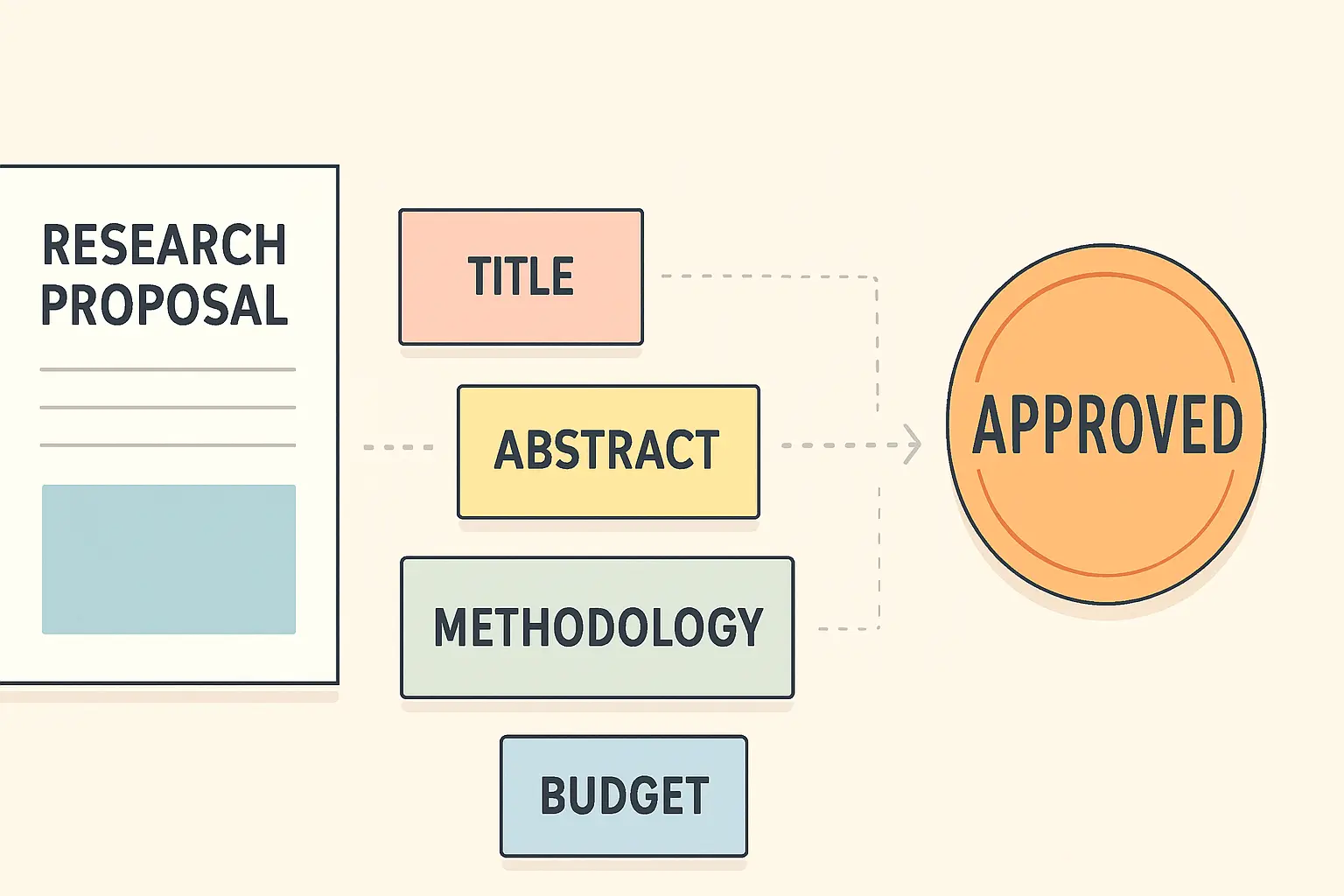
This guide walks through the eight sections most South African faculties expect, states what each one has to prove, and flags where proposals get sent back.
Before you start: get your faculty’s template
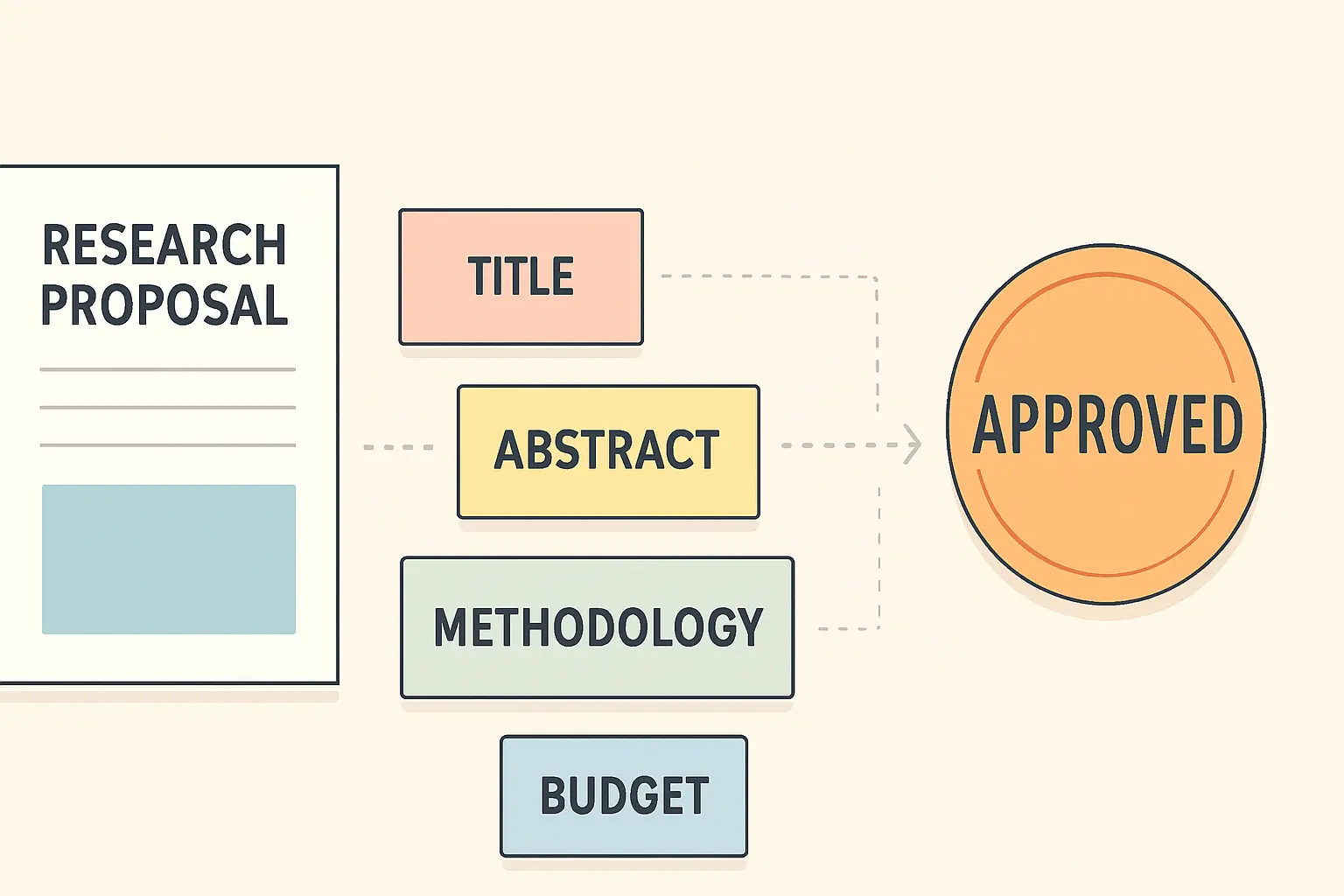
South African universities do not share one proposal format. Faculties within a single institution often differ, and the committee marks against its own template. Find it before you write a word — usually on the faculty’s postgraduate pages or from the postgraduate administrator.
Where this guide and your faculty template disagree, your faculty template wins. Confirm too which level you are proposing at, because the expectations differ sharply across the honours research report, master’s dissertation and doctoral thesis ladder.
Step 1: Write a title that states the variables and the setting
A working title should name what you are studying, in whom or what, and where. “Factors affecting employee retention” could be anything. “Factors affecting nurse retention in public district hospitals in the Eastern Cape” tells a committee what you actually propose to do.
Expected output: a single title line under about 20 words naming the phenomenon, the population and the setting.
Step 2: Write the problem statement
This is the section that decides whether the committee takes the proposal seriously. It has to establish that something is genuinely unresolved — not merely that a topic is interesting.
Structure it in three moves: what is known and accepted, what remains unknown or contested, and why that gap matters in a South African context. The third move is where local proposals earn their place; a gap established only from American and European literature invites the question of whether it is a gap here.
Expected output: three to five paragraphs ending in an explicit sentence beginning “The problem this study addresses is…”.
Step 3: State research questions and objectives
Questions and objectives are not the same thing and committees notice when they are conflated. Questions are what you want to know; objectives are what you will do to find out.
Keep to one main question with two to four sub-questions. Every sub-question must be answerable by a method you describe later — if nothing in your methodology produces an answer to sub-question three, delete it or add the method.
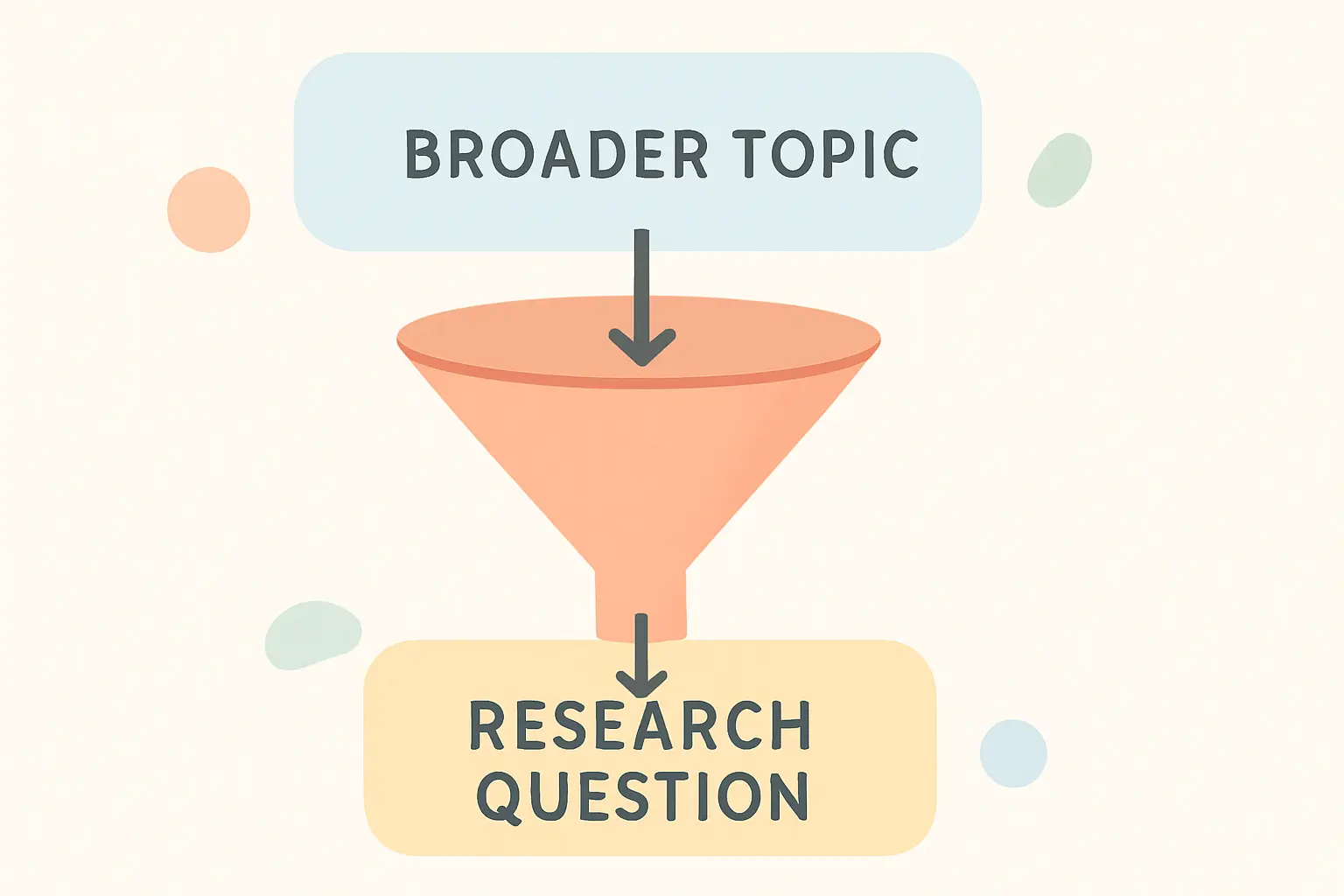
Expected output: one main question, two to four sub-questions, and a matching numbered objective for each.
Step 4: Write a preliminary literature review
At proposal stage this is not the full review. Its job is narrower: to show you know the field well enough to be sure your gap is real.
Organise it by theme rather than by source. A paragraph that begins “Smith (2021) found…” and the next that begins “Ndlovu (2022) found…” is an annotated list, not a review. Group studies by what they argue, then position your question in the space between them.
Expected output: a themed review, typically 1 500 to 3 000 words at master’s level, ending by restating the gap.
Step 5: Write the methodology
Committees reject more proposals here than anywhere else, almost always for the same reason: a method that cannot answer the stated question. Cover design, population and sampling, instruments, data collection procedure, analysis, and trustworthiness or validity.
Be concrete and realistic. “Interviews will be conducted with participants” is not a method. “Semi-structured interviews of roughly 45 minutes with 12 to 15 professional nurses, sampled purposively across three district hospitals, recorded and transcribed, analysed thematically” is one a committee can evaluate — and one you can actually deliver.
Expected output: a methodology section in which every research sub-question has a visible route to an answer.
Step 6: Address ethics before the committee asks
If your study involves people, their personal information, patient records, learners, or data held by an employer, the proposal must say so and describe how you will handle consent, confidentiality, storage and the right to withdraw. Data about identifiable people carries legal obligations in South Africa, not only institutional ones.
The sequencing catches people out: ethics clearance normally follows proposal approval, and you may not collect a single data point before clearance is granted. Build both queues into your timeline rather than discovering them in sequence.
Expected output: an ethics section naming the risks, the consent process, and how personal information will be protected and eventually disposed of.
Step 7: Add the work plan and budget
A realistic timeline signals a candidate who has thought the project through. Include proposal approval, ethics clearance, data collection, analysis, writing, supervisor review cycles and submission — and give supervisor turnaround real weeks, not days.
Budget honestly for South African conditions: travel to sites, mobile data, transcription, and any software your institution does not already licence.
Step 8: Reference list, in your faculty’s Harvard variant
Harvard is the most common style in South African faculties, but there is no single Harvard standard. Institutions publish their own variants and faculties within one institution can differ on punctuation, italics and the placement of the year.
A journal article in a typical Harvard variant looks like this:
Mokoena, T. and Naidoo, P. (2024) 'Retention of professional nurses in rural district hospitals', South African Journal of Health Management, 18(2), pp. 45-61.
And the matching in-text citation: (Mokoena and Naidoo, 2024), or Mokoena and Naidoo (2024) argue that… when the authors are the subject of your sentence.
Treat that as a shape to check against your own faculty guide rather than a national standard. The detail examiners actually penalise is inconsistency — one convention applied throughout beats a perfect variant applied intermittently.
Expected output: a reference list in one consistent variant, containing every source cited in the text and nothing that is not.
What gets proposals sent back
- A question the method cannot answer. The single most common cause.
- A gap asserted rather than demonstrated. “Little research exists” with no evidence that you looked.
- Scope far beyond the level. A master’s proposal describing three studies.
- Ethics treated as a formality. A single sentence promising confidentiality.
- A timeline with no slack. Committees know how long clearance and supervision take.
- Inconsistent referencing. Cheap to fix and disproportionately damaging.
Frequently asked questions
How long should a research proposal be?
Faculty templates commonly ask for somewhere between 10 and 25 pages at master’s level, with doctoral proposals longer. Your template governs; where it gives a limit, treat it as binding.
Can I change my topic after the proposal is approved?
Minor refinement is normal and expected. A substantive change of question, population or method usually requires re-approval, and may require fresh ethics clearance.
Do I need ethics clearance if I only use existing data?
Often yes. Secondary data about identifiable people, and data held by an institution about its staff, students or patients, generally still requires clearance. Ask rather than assume.
How many references should the proposal have?
There is no rule. Enough to establish the gap credibly, weighted towards recent work and including South African literature where it exists.
Who approves the proposal?
Typically a departmental or faculty research committee, after your supervisor is satisfied. Some faculties add a proposal defence or seminar.
What if my supervisor and the committee disagree?
Follow the committee’s written feedback, and ask your supervisor to help you respond to it point by point. A response document mapping each comment to a change is the fastest route through a resubmission.
Get the proposal out of the way
The proposal is the cheapest part of the degree to get right and the most expensive to get wrong, because every week it sits in revision is a week you are not collecting data. Tesify helps you structure it, draft each section and keep your Harvard references consistent — 100% written by you.