| Outcome measure | Domain | Typical population | Approx. administration time | Access (verify current terms) |
|---|---|---|---|---|
| Oswestry Disability Index (ODI) | Low back pain disability | Adults with lower back pain | 5–10 min, self-report | Copyrighted — check the distributor’s conditions of use before administering |
| Berg Balance Scale (BBS) | Balance, fall risk | Older adults, neurological patients | 15–20 min, performance-based | Freely available, requires basic equipment |
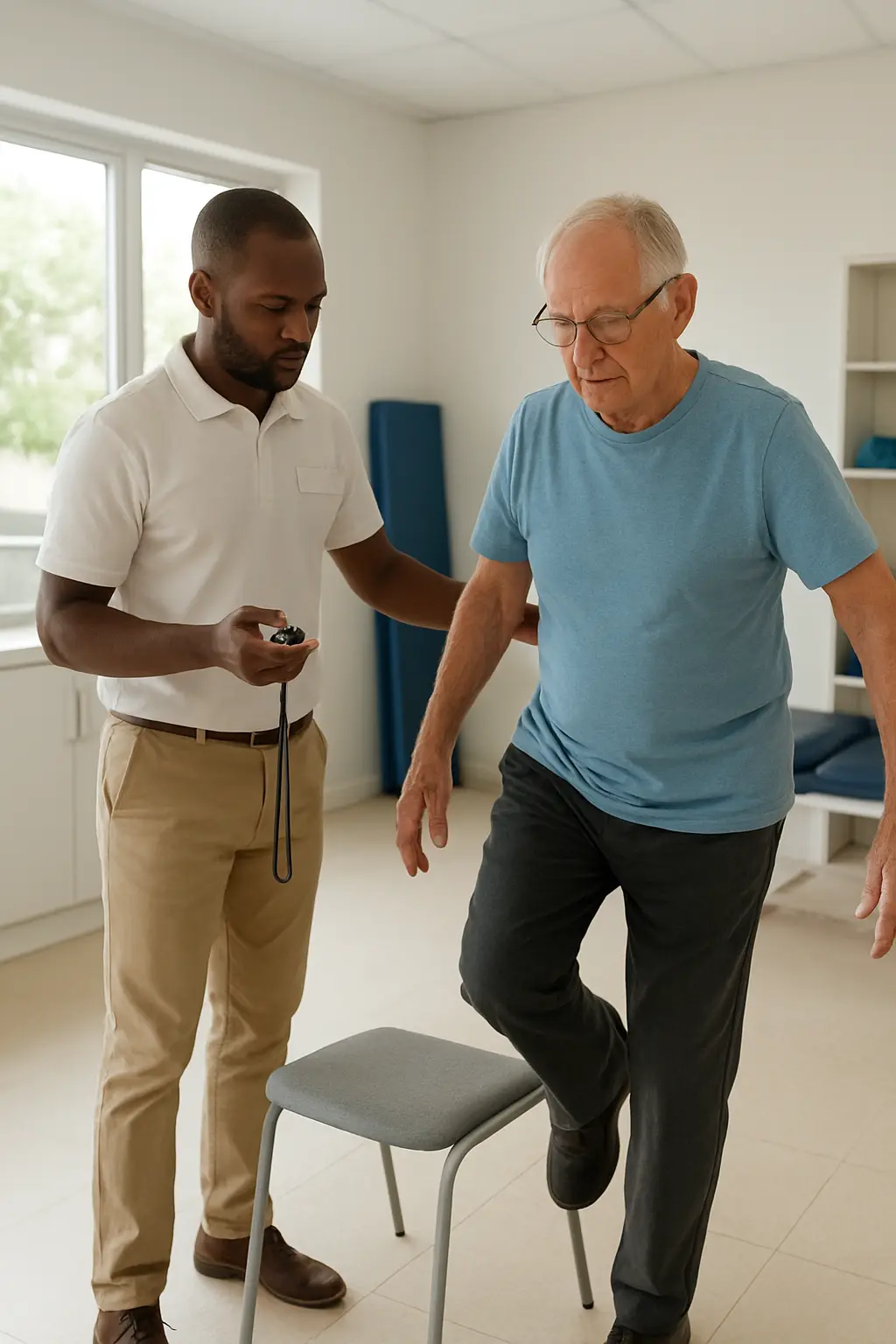
| Timed Up and Go (TUG) | Functional mobility | Older adults, general mobility-impaired | 2–3 min, performance-based | Free, chair and stopwatch only |
| 6-Minute Walk Test (6MWT) | Cardiopulmonary/exercise capacity | Cardiac, respiratory, general deconditioning | 10–15 min incl. setup | Free, needs a measured corridor |
| Fugl-Meyer Assessment (FMA) | Post-stroke motor recovery | Stroke patients | Substantial; longer if all domains are scored | Freely available, requires trained rater |
| DASH (Disabilities of the Arm, Shoulder and Hand) | Upper-limb function | Upper-limb injury/surgery patients | 5–10 min, self-report | Free if not sold or built into a sold product; keep its original format |
| Modified Ashworth Scale (MAS) | Spasticity | Neurological patients (stroke, spinal cord injury) | A few minutes per muscle group | Free, requires trained rater |
| Numeric Pain Rating Scale (NPRS) | Pain intensity | Any pain population | Under 1 min, self-report | Free |
The short answer
Match the instrument to your construct first, your population second, and your resources third. A student measuring low back pain disability reaches for the ODI; one measuring stroke motor recovery reaches for the Fugl-Meyer; one who needs a fast, equipment-free screen for functional mobility in an older-adult sample reaches for the Timed Up and Go. Do not choose an instrument because it is well known — choose it because it measures the exact construct your research question names.
Ranked shortlist: who each instrument actually suits
1. Oswestry Disability Index — best for low back pain disability studies
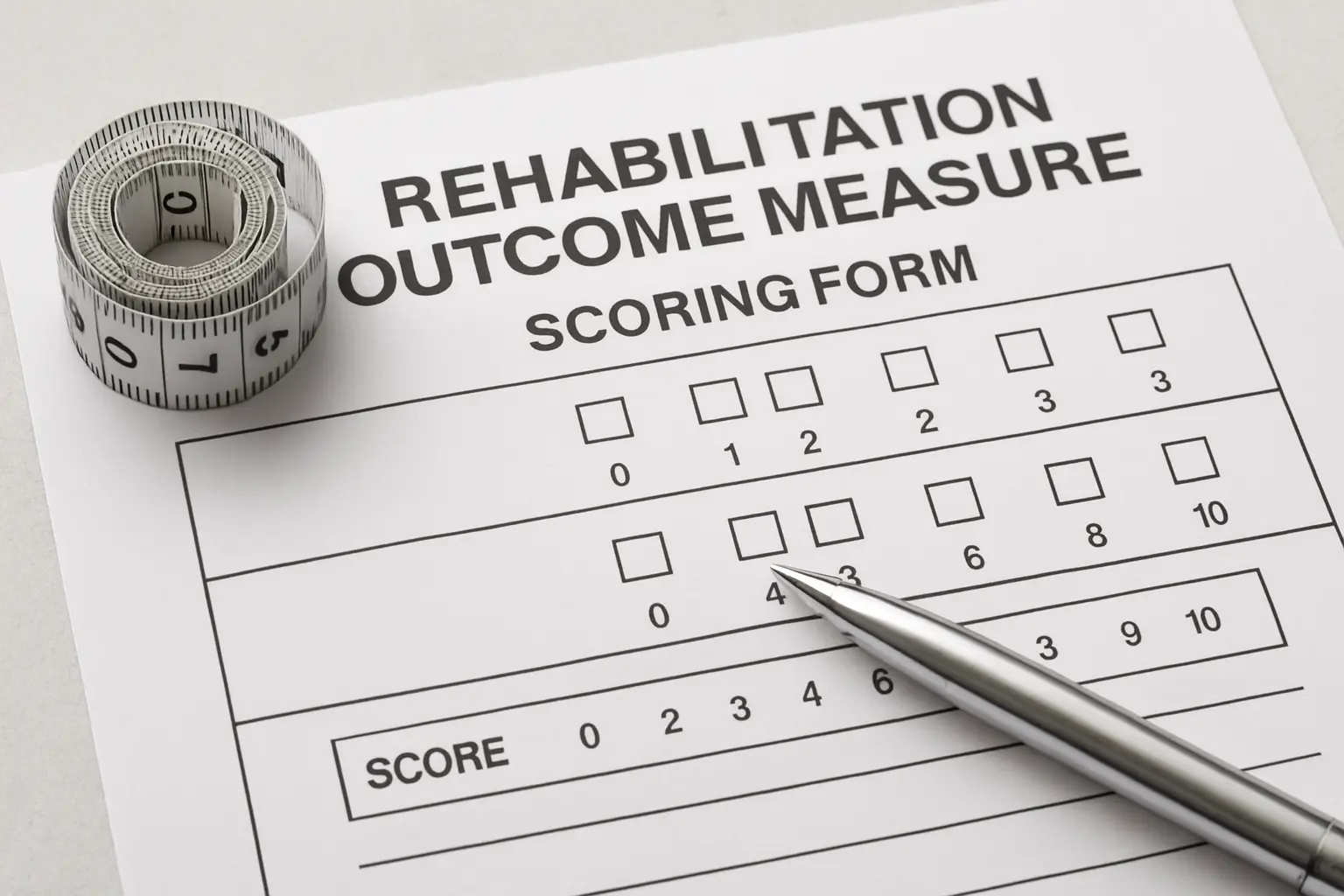
Ten self-report sections covering pain intensity and its effect on daily activities, scored as a percentage of disability. Fast to administer, no training required, and it is one of the most widely used outcome measures in low back pain research internationally, which makes your results easy to compare against the published literature. Falls short where your study measures something other than low back pain specifically — it is not a general disability scale.
2. Berg Balance Scale — best for fall-risk and balance studies in older or neurological populations
Fourteen performance-based tasks scored 0–4, widely used in stroke, Parkinson’s and general geriatric balance research. Falls short on time (15–20 minutes per participant, which adds up fast in a larger sample) and on a ceiling effect in higher-functioning participants, where scores cluster near the maximum and stop discriminating.
3. Timed Up and Go — best when you need a fast, low-resource mobility screen
A chair, a 3-metre mark and a stopwatch is the entire equipment list, which makes it the practical choice for fieldwork in a resource-constrained South African clinic or community setting. Falls short as a standalone outcome measure for a dissertation needing a more granular balance construct — it produces one number, not a profile.
4. 6-Minute Walk Test — best for exercise capacity and cardiopulmonary rehabilitation studies
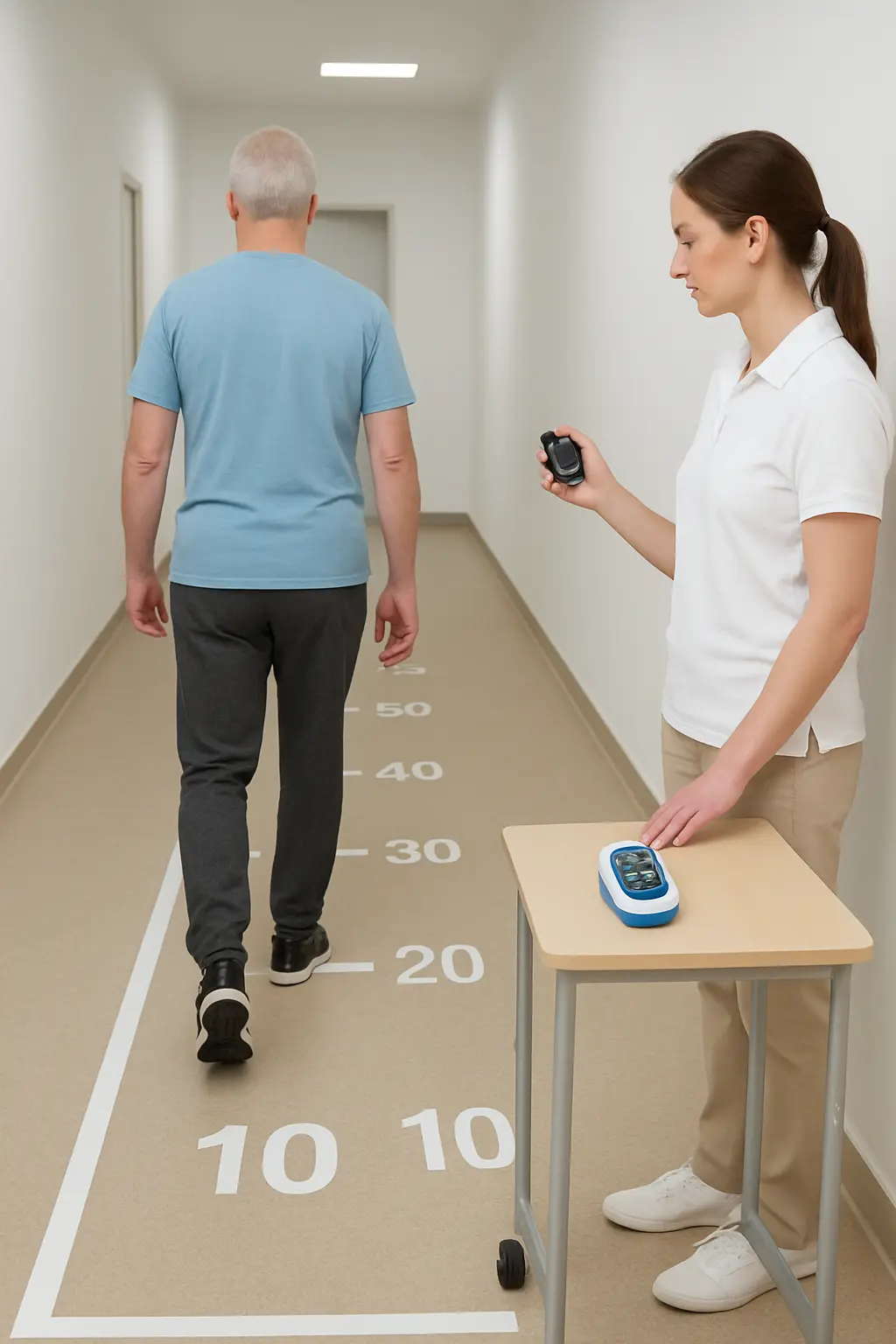
Measures the distance walked in six minutes on a flat, measured corridor, a strong proxy for functional exercise capacity in cardiac and respiratory populations. Falls short where a corridor of the required length is not available at your data collection site, or where the population cannot safely walk continuously for six minutes.
5. Fugl-Meyer Assessment — best for post-stroke motor recovery studies
One of the most comprehensive and widely used motor-recovery instruments in stroke rehabilitation research, covering reflexes, movement, coordination and speed across the affected limb. Falls short on administration time and rater training — scoring reliably takes practice, and a dissertation timeline should budget for this before data collection, not discover it during.
6. DASH — best for upper-limb function studies
Thirty self-report items covering symptoms and function across a wide range of upper-limb conditions, which makes it the default where the injury or surgery type varies across your sample rather than being condition-specific. Falls short where you need a condition-specific instrument (a rotator-cuff-specific scale, for instance) that captures nuance DASH’s general items miss.
7. Modified Ashworth Scale — best for spasticity studies
A quick, widely used ordinal scale for muscle tone, well established in stroke and spinal cord injury research. Falls short on inter-rater reliability, which several studies have reported as only moderate even among trained raters — a dissertation using MAS should report inter-rater agreement if more than one assessor collects data.
8. Numeric Pain Rating Scale — best as a companion measure, not a standalone outcome
The fastest instrument on this list and appropriate almost anywhere pain is a relevant construct, but it measures intensity alone. Falls short as the sole outcome measure in most physiotherapy dissertations, where pain’s functional impact (which the ODI or DASH captures) usually matters as much as its intensity.
Our recommendation
Start from the construct in your research question, not from a list of familiar names. If your study is condition-specific (low back pain, stroke, a named upper-limb injury), the condition-specific instrument (ODI, Fugl-Meyer, DASH) will usually out-perform a general scale in both examiner recognition and comparability with published literature. If your study spans a mixed population or needs a fast field screen, the Timed Up and Go or a simple pain scale paired with a function-specific companion measure is the pragmatic choice.
Access in a South African public-sector clinical setting
Several instruments on this list were chosen for this comparison partly because they need no purchased software or equipment — a real constraint for a student collecting data in a public-sector clinic or community health setting with limited equipment budgets. The TUG and NPRS need essentially nothing beyond a chair, a stopwatch and a pen; the BBS and 6MWT need a measured space but no equipment cost; the FMA and MAS need a trained rater’s time rather than money, which is a real cost but a different kind — budget rater training and inter-rater calibration sessions into your project timeline alongside your ethics application, not after it is approved.
Which statistical test fits which kind of outcome measure?
The data type each instrument produces determines the analysis your methodology chapter can defensibly propose. The ODI and DASH produce interval-like percentage or summed scores, generally analysed with parametric tests (t-tests, ANOVA, Pearson correlation) once normality is checked. The Berg Balance Scale and Modified Ashworth Scale produce ordinal data, which is more defensibly analysed with non-parametric tests (Mann-Whitney U, Wilcoxon, Spearman correlation) unless your department’s convention treats summed ordinal totals as interval, a choice that should be stated and justified rather than assumed. The 6-Minute Walk Test and Timed Up and Go produce continuous, ratio-level data (metres, seconds), the most straightforward to analyse but still subject to a normality check before choosing a parametric test. Deciding this alongside your instrument, not after your data is collected, is exactly the kind of alignment the site’s statistical test decision guide works through in more depth.
What to check before you assume a scale applies unchanged to your sample
Every instrument above was developed and validated internationally, most in English-language, high-income-country samples. Before using one in a South African dissertation, check three things: whether a South African or broader African validation study exists for your specific population (search the instrument name plus “South Africa” and plus “validity” in your university’s database access); whether a translated version exists if your sample includes first-language isiZulu, isiXhosa, Afrikaans or Sesotho speakers, and whether that translation was itself validated rather than just translated; and whether the scale’s normative cut-offs (a Berg Balance Scale fall-risk threshold, for instance) were derived from a population similar enough to yours to apply without adjustment. Where none of this has been established, say so explicitly in your limitations section rather than assuming international norms transfer unchanged.
How does this compare to the validated scales already on this site?
The site already covers instrument selection for HRM and nursing dissertations — both self-report psychological or organisational scales. Physiotherapy outcome measures are a different instrument family: several on this list (BBS, TUG, FMA, MAS) are performance-based, scored by a trained assessor observing a task, not answered by the participant. The considerations that matter — rater training, inter-rater reliability, equipment — are specific to this family and do not carry over from a self-report questionnaire.
Frequently asked questions
Can I use more than one outcome measure in the same study?
Yes, and it is common — a pain scale alongside a function-specific measure (NPRS plus ODI, for example) captures two related but distinct constructs. Just ensure each has its own row in your variables matrix, with its own hypothesis if you are testing a relationship.
Do I need permission to use these instruments?
Check each instrument’s own terms and cite the original validation study when you report your methodology. Terms differ: the DASH, for example, is free provided it is not sold or built into a product that is sold, and must be kept in its original format, while the ODI is copyrighted and distributed under its holder’s conditions of use.
What if my supervisor recommends an instrument not on this list?
This list covers eight of the most common instruments across physiotherapy sub-fields, not an exhaustive inventory — apply the same three checks (construct match, population match, resource match) to whatever instrument your supervisor recommends.
How do I report reliability if I am the only rater?
Report intra-rater reliability by re-scoring a subset of your own assessments (video-recorded, if the protocol allows) at a later time point, rather than reporting no reliability check at all.
Which of these instruments works best for a paediatric physiotherapy dissertation?
None on this list is paediatric-specific — paediatric physiotherapy research typically uses purpose-built child and adolescent instruments (such as the Gross Motor Function Measure), which sit outside this comparison and deserve their own search of the paediatric physiotherapy literature.
Is a performance-based measure always better than a self-report one?
No — they capture different things. A performance-based measure like the TUG captures observed capability under test conditions; a self-report measure like the ODI captures the participant’s own perceived function in daily life, which does not always match observed performance.
Where do I find the actual instrument documents?
Most are published in their original validation article, and many rehabilitation-measures repositories (hosted by universities or professional bodies) host free PDF versions with scoring instructions — search the instrument’s full name plus “PDF scoring manual,” and use the copyright holder’s official version where one exists.
Should I pilot the instrument even if it is already validated?
Yes. Validation elsewhere does not guarantee smooth administration in your specific setting — a pilot with two or three participants from your target population catches practical problems (unclear instructions, equipment access, timing) before your real data collection begins.
Does the HPCSA regulate which outcome measures I can use in a student research project?
The Health Professions Council of South Africa regulates the scope of physiotherapy practice and professional registration, not a specific list of approved research instruments — instrument choice is a methodological decision made with your supervisor and, where the study involves patients, cleared through your institution’s health research ethics committee.
Can a validated instrument still fail in my study?
Yes — internal consistency (Cronbach’s alpha, for ordinal composite scores) or inter-rater reliability (for performance-based measures) should be checked in your own sample and reported, even for a well-established instrument, since a scale that performed well in its original validation sample does not guarantee the same performance in yours.
How many outcome measures is too many for one dissertation?
There is no fixed limit, but each additional instrument adds administration time, participant burden and an analysis obligation — a small set of well-matched instruments is usually more manageable than a long battery collected because each seemed potentially useful. Tesify can help you document your final instrument choices correctly in your methodology chapter.