No. Examiners do not mark your first language — they mark register, precision and consistency. English is the language most often spoken in only 8,7% of South African households, so writing a dissertation in a second or third language is the normal South African experience, not a disadvantage anyone is scoring against you. What costs marks is a sentence an examiner has to read twice.
This page is not a grammar lecture. It is the specific list of constructions that get circled in South African dissertations, why each one is circled, the replacement, and a one-hour pass you can run on a finished draft tonight.
How normal is this, actually?
More normal than the anxiety suggests. Census 2022 records the language spoken most often in South African households as follows:
| Language | Share of households, 2022 | Source |
|---|---|---|
| isiZulu | 24,4% | Stats SA, Census 2022, Table 2.8 |
| isiXhosa | 16,3% | Stats SA, Census 2022, Table 2.8 |
| Afrikaans | 10,6% | Stats SA, Census 2022, Table 2.8 |
| Sepedi | 10,0% | Stats SA, Census 2022, Table 2.8 |
| English | 8,7% | Stats SA, Census 2022, Table 2.8 |
| Setswana | 8,3% | Stats SA, Census 2022, Table 2.8 |
| Sesotho | 7,8% | Stats SA, Census 2022, Table 2.8 |
| Xitsonga | 4,7% | Stats SA, Census 2022, Table 2.8 |
| siSwati | 2,8% | Stats SA, Census 2022, Table 2.8 |
| Tshivenda | 2,5% | Stats SA, Census 2022, Table 2.8 |
| isiNdebele | 1,7% | Stats SA, Census 2022, Table 2.8 |
Stats SA reports that isiZulu “remained the most spoken language in the country, constituting almost a quarter (24,4%), followed by isiXhosa (16,3%) and Afrikaans (10,6%)”. The same release records that South African Sign Language was promulgated as the country’s twelfth official language in July 2023. The table excludes children under one year old.
One caution about reading that table across to your own faculty. It describes households, not postgraduates, and no national dataset breaks home language down by degree level — so nobody can give you an exact figure for how many master’s candidates write in an additional language. What the table does establish is the direction, and the direction is not in doubt: most South African postgraduates are writing a dissertation in a language other than the one spoken at home, and the examiners reading those dissertations know it.
Are you allowed to write it in your own language instead?
At some institutions, explicitly yes — and this is the least-known provision in South African postgraduate regulation.
Unisa’s Language Policy, approved by Council on 28 April 2016, states plainly at clause 4.3.1 that “The LoLT in all postgraduate courses will be English.” But clause 4.3.3 then provides that postgraduate research students are allowed to write their proposals, theses or dissertations in
“a) the language of the subject in which the proposal, thesis or dissertation is offered, or b) any of South Africa’s official languages, or c) any other language as approved by the relevant College Higher Degrees Committee”
subject to a condition that decides most cases in practice: “provided that there is sufficient supervisory and examination capacity available for the estimated duration of the study. The student’s choice of language has to be negotiated and agreed formally at the start of the study.”
Three things follow. The permission is real, not theoretical. The binding constraint is not policy but people — whether your department can find a supervisor and two examiners who work in that language for the years your study will run. And the timing clause is strict: this is negotiated at the start, not discovered in your final year. If writing in isiZulu, Sesotho or Afrikaans genuinely matters to your work, raise it at registration.
That is Unisa’s policy, quoted from Unisa’s own document. South African universities set their own language policies and they differ from one another, so read yours rather than assuming this one transfers. The same Unisa document also commits the university to helping students improve their “cognitive academic language proficiency (CALP) in English, as well as in their own languages” — which is the clause to quote when you ask your writing centre for help and are told there is no provision.
What do examiners actually circle?
Four things, and none of them is your first language. In rough order of how much they cost you:
| What the draft does | Why it is marked | The repair |
|---|---|---|
| A 60-word sentence with three subordinate clauses | The examiner loses the main verb and has to re-read | Split at the first comma that could be a full stop |
| Tense drifts inside one paragraph | Reads as unedited; obscures what was done versus what is claimed | Fix the tense per section, then check paragraph by paragraph |
| “the respondents” where you mean respondents in general | Article use changes the meaning, not just the sound | Definite article only for a specific, already-identified group |
| discuss about, emphasise on, comprises of | A preposition added to a verb that does not take one | discuss, emphasise, comprises |
| cope up with, revert to me, kindly find attached | Correspondence register in a chapter | cope with, reply to me, delete entirely |
| “as per the guidelines” | Administrative register, rare in academic prose | according to, in accordance with, following |
| “the same was analysed” | “The same” as a pronoun is legal-commercial writing | it, these data, the responses |
| “it is worth mentioning here that” | Throat-clearing that delays the sentence | Delete. Start with the point |
| Mixing 4,52 and 4.52 between chapters | Decimal convention applied inconsistently | Pick one, apply to every number |
| “The study argues that…” | A study cannot hold an opinion; a researcher can | Name the researcher |
Two patterns account for most of that table. The first is sentence length, which is not a second-language problem at all — it is the single most common weakness in academic writing everywhere, and it is worse in a language you are working hard in, because effort produces long sentences. The second is correspondence vocabulary migrating into chapters, because email is the English most people write all day.
Which of these is a variety, and which is a register?
This distinction is worth holding onto, because it decides what you should change and what you should defend.
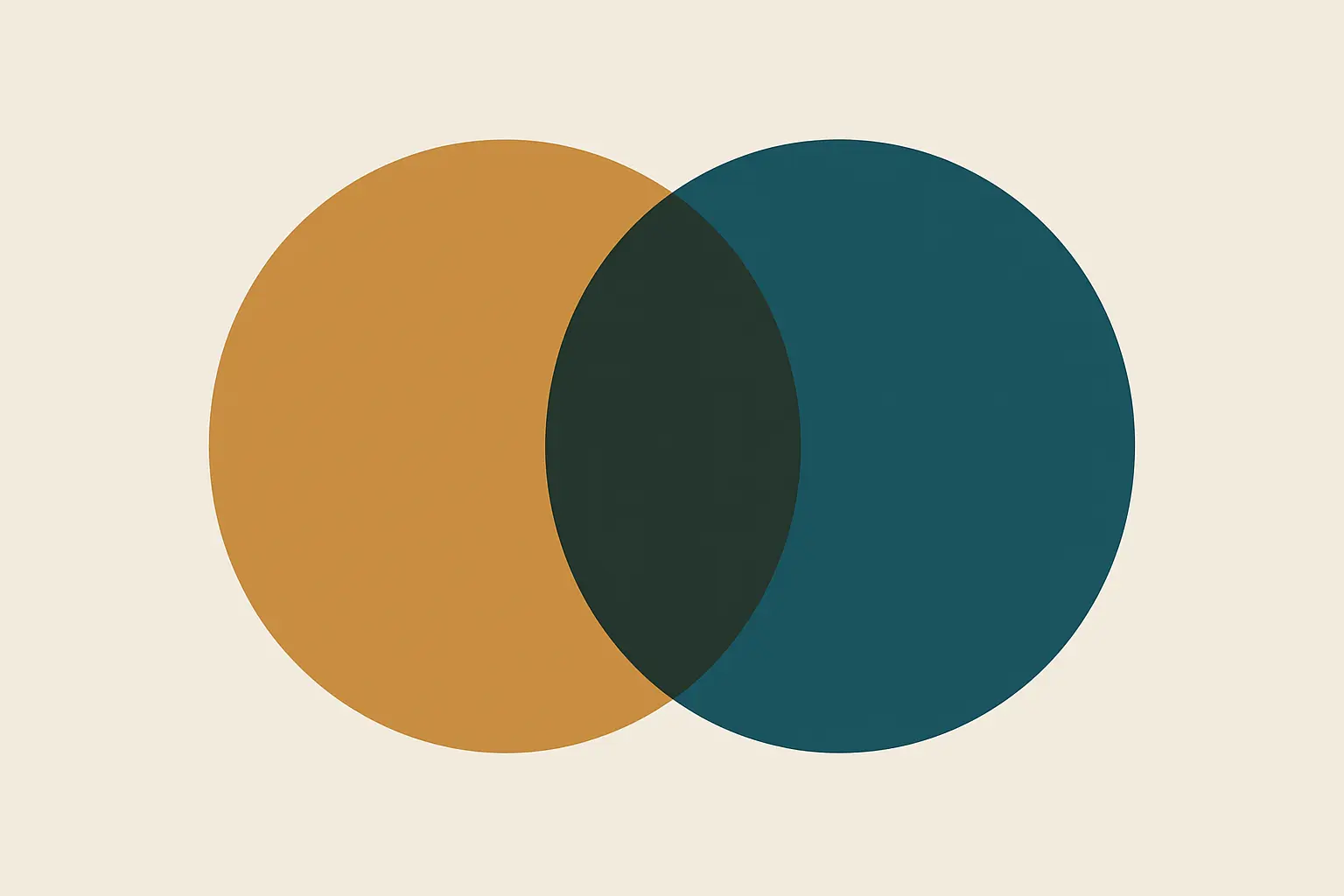
A variety is which English you speak. South African English is an established variety with its own vocabulary and idiom, and nothing on this page argues that you should write like somebody from Oxford. A register is how formal the situation is. Every variety of English has a casual register, an administrative register and an academic register.
Almost everything examiners flag is a register issue, not a variety issue. An examiner reading “kindly refer to the same in Chapter 3” is not detecting where you are from. They are detecting that the sentence was written in the register of an office memo.
What should you not change?
A surprising amount, and this matters as much as the list above.
Keep South African spelling. Analyse, behaviour, programme, organisation, labour. This is house style at South African universities, not error, and switching to American spelling to please an imagined foreign reader is the wrong instinct.
Keep South African terms of art. Learner, matric, municipality, ward councillor, SASSA grant, RDP housing, load reduction, the SGB, the HOD. These are the correct technical names for what you studied. Gloss each one on first use in a clause, then use it freely. Replacing them with vague paraphrase makes the dissertation worse and less citable.
Keep your data and your context South African. The register pass is about sentences. It is not an instruction to internationalise your subject matter, and a literature review that suppresses South African scholarship to look global is a weaker review — the case for building the chapter the other way round is made in our guide to writing a literature review for a South African dissertation.
Keep participants’ words as they said them. Where you quote interview data, quote it. Translation and transcription decisions belong in the methodology and are set out in our guide to thematic analysis for a South African dissertation. Tidying a participant’s grammar inside a quotation is a data-integrity problem, not a language improvement.
How do you find these in your own draft in one hour?
- Run the length check first. Search for every sentence over about 35 words. Most word processors will not do this directly, so read with a ruler: any sentence running more than three lines on screen is a candidate. Split at the first comma that could be a full stop. This single pass does more than the rest combined.
- Search, do not read. Take the left-hand column of the table above and search each string across the whole document, one at a time. Reading for these is useless, because they are invisible to the person who wrote them — that is exactly why they survived the draft.
- Fix in place, one string at a time. Do not improve the surrounding sentence while you are there. Mixing a language pass with a content pass is how a clean chapter acquires a new error.
- Do a decimal sweep. Decide comma or point, then apply it to every number, every table and every figure caption. Our guide to turning SPSS output into a results chapter covers the reporting conventions this interacts with.
- Read your abstract aloud. One page, slowly, out loud. The abstract is read first, quoted most and revised least, and it is where a single lapse does disproportionate damage. Reading aloud catches long sentences that the eye slides over.
Expect roughly forty to eighty hits across a full dissertation. That is normal and it says nothing about the quality of your research.
Should you pay an editor?
Often yes, and it is the single most useful thing an editor does for a dissertation written in an additional language. The boundary is what matters: an editor may correct grammar, punctuation, tense consistency and sentence-level clarity, and may flag ambiguity. An editor may not rewrite passages in their own voice, restructure your argument or supply content.
Agree that scope in writing before any money changes hands, keep the tracked-changes file, and check whether your faculty requires you to declare the edit. Rates, the five options ranked, and the line between editing and somebody else’s writing are set out in our guide to what dissertation editing costs in South Africa. Run a free software pass over the whole document first — every error it catches is a word you are not paying to have corrected.
Getting the register right while you draft, not after
Everything above is a repair pass, and repair passes are expensive because they happen when you are already tired and already late. The cheaper version is to write in academic register from the first draft, which is mostly a matter of having the right sentence patterns available at the moment you need them.
Tesify drafts your chapters in formal academic English from your own material and your own sources, so most of the constructions on this page never enter the document — and every citation stays bound to a real reference as the chapter grows. There is a free tier, so you can try it on one section before deciding about anything paid. The research, the argument and the responsibility remain entirely yours, and where your institution requires you to declare writing assistance you should declare it; our guide to AI policy at South African universities sets out what UCT, Wits, Stellenbosch and Unisa each require.
Start writing your dissertation with Tesify
Frequently asked questions
Will I be marked down because English is not my first language?
No. Examiners assess the research — its design, its evidence and its contribution — and then the clarity of the writing. What costs marks is language that makes the argument hard to follow or imprecise, not the fact that you speak isiZulu or Sesotho at home. Register problems produce comments and minor corrections, not failure.
How many South Africans actually speak English at home?
According to Census 2022, English is the language most often spoken in 8,7% of South African households. IsiZulu leads at 24,4%, followed by isiXhosa at 16,3%, Afrikaans at 10,6% and Sepedi at 10,0%. That figure describes households rather than postgraduates specifically, and no national dataset breaks home language down by degree level — but it is why most South African postgraduates write in a language other than the one they grew up speaking.
Can I write my dissertation in isiZulu or Afrikaans instead?
At some institutions, yes. Unisa’s Language Policy states that the language of learning and teaching in all postgraduate courses will be English, but clause 4.3.3 allows postgraduate research students to write proposals, theses or dissertations in any of South Africa’s official languages, or another language approved by the College Higher Degrees Committee, provided there is sufficient supervisory and examination capacity for the estimated duration of the study. The choice has to be negotiated and agreed formally at the start. Check your own institution’s policy, because they differ.
What do examiners actually circle?
Four things, in this order: sentences so long the main verb is lost, tense that drifts within a paragraph, articles and prepositions used unpredictably, and vocabulary borrowed from correspondence or administrative writing. None of these are about first language as such — they are about register and about sentence control.
Should I write in British or American English?
South African academic writing follows British conventions — analyse, behaviour, programme, organisation — and your faculty guide governs. Consistency matters far more than the choice. A document that mixes analyse and analyze looks unedited regardless of which one an examiner prefers.
Do I use a decimal comma or a decimal point?
South African English uses the decimal comma and official sources such as Stats SA publish that way, while most statistical software and APA-style guidance assume the point. Choose whichever your faculty guide requires and apply it to every number in the document. Mixing the two within one dissertation is the visible error.
Is it cheating to have my dissertation language-edited?
No, provided the editor changes wording and not content. An editor may correct grammar, punctuation, tense consistency and sentence-level clarity. An editor may not rewrite passages in their own voice, restructure your argument or supply content. Agree the scope in writing, keep the tracked-changes file, and declare the edit where your faculty requires it.
Will a grammar checker catch these problems?
Partially. Automated checkers reliably catch subject-verb disagreement and runaway sentence length, but they routinely pass article and preposition choices that are grammatical yet unidiomatic, and they cannot see register at all. That is why the targeted search pass in this article exists.
Should I use simpler words to be safe?
Use precise words, which is not the same as simple ones. Technical vocabulary in your discipline should be exact and is expected. What should be plain is the sentence structure around it. The commonest overcorrection is reaching for elaborate general vocabulary to sound academic, which produces exactly the imprecision you were trying to avoid.
Do I need to remove South African terms and examples?
No, and removing them usually weakens the dissertation. Terms such as load reduction, SASSA grant, RDP housing, learner, matric and municipality are the correct technical names for what you studied. Gloss each on first use and then use it freely. An external examiner is appointed for disciplinary expertise, not because your subject should be less South African.
How long does the language pass take?
About an hour for the targeted searches on a finished draft, plus a slower read of the abstract and introduction aloud. Expect roughly forty to eighty small changes across a full dissertation. It is one of the highest-return hours available in the last month before submission.
My supervisor writes this way. Should I copy my supervisor?
Copy your supervisor on argument, method and disciplinary convention, which is what supervision is for. Do not copy correspondence vocabulary out of an email into a chapter. If your supervisor edits a sentence into administrative register, leave it — the relationship costs more than the sentence saves.