Most topic lists are assembled from what sounds current. This one is assembled from two things that actually decide whether an education dissertation finishes: what the Department of Basic Education says its priority research questions are, and whose permission each topic needs before you can collect a single response.
The second is the one that catches South African education students out, so it comes first.
The permission rule almost everyone gets wrong
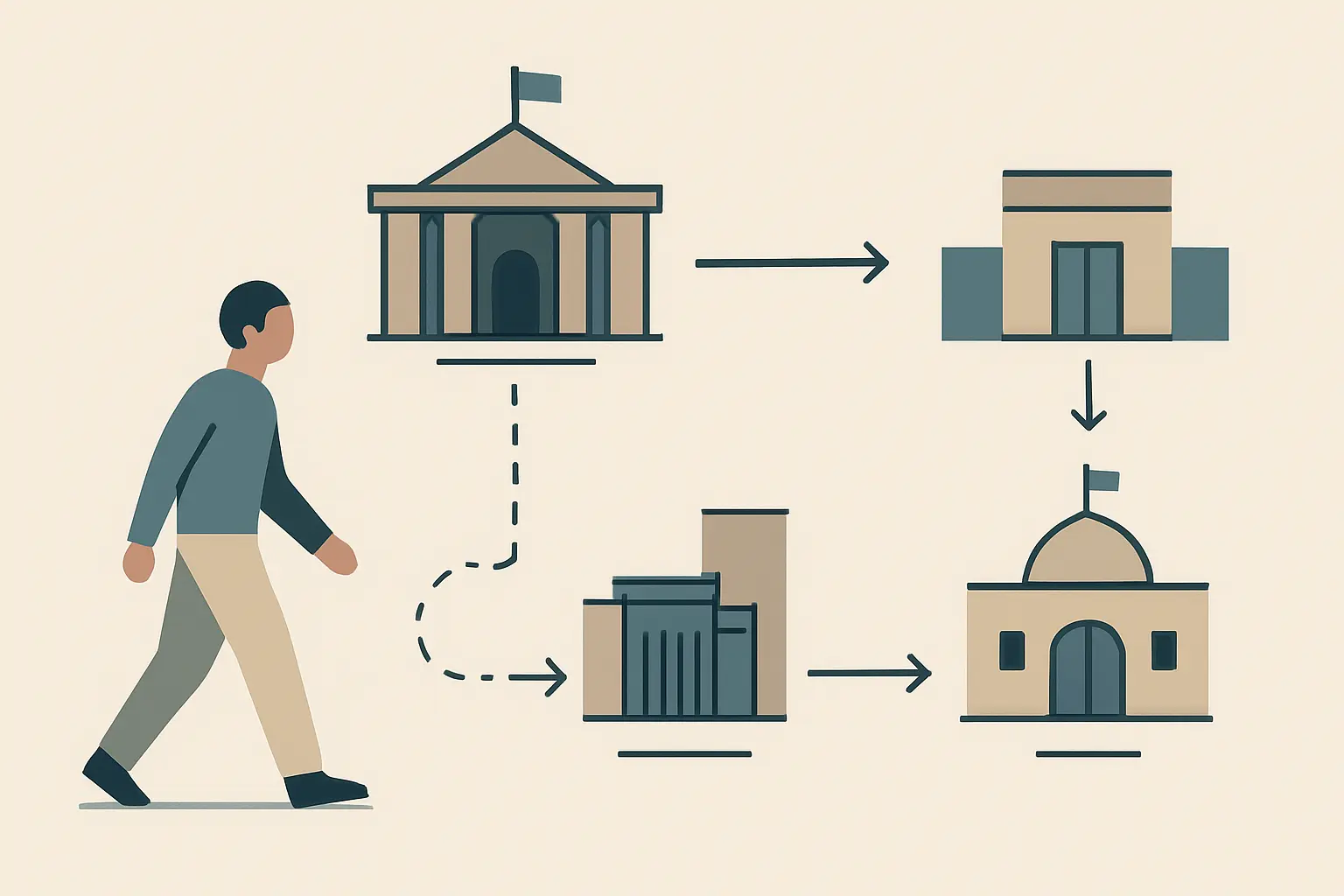
The Department of Basic Education states it plainly on its own researcher page:
“The DBE does not grant permission for research conducted in schools, districts, or Provincial Education Departments (PEDs). Researchers intending to conduct research at these institutions must submit their applications directly to the relevant PED… Similarly, the DBE does not grant permission for research conducted in Early Childhood Development (ECD) centres.”
So if your study involves learners, teachers, principals, district officials or ECD centres, the national department is not your gatekeeper — the provincial education department is, and the DBE publishes a contact list of the PED officials who process research requests, along with a research request form.
The national research request process exists for something different: interviews with DBE officials, departmental data, official reports and national-scale studies. Applying to the wrong one costs weeks, and weeks are what a mini-dissertation does not have.
Three practical consequences for choosing a topic:
- A topic requiring access to schools needs institutional ethics clearance first, then PED approval, then principal consent, in that order and usually with the previous approval attached.
- A topic that uses only published data — departmental reports, national assessment results, the DBE research repository — skips the PED queue entirely. For a one-year mini-dissertation that is a real advantage, not a lesser project.
- A topic involving learners as participants adds a further layer: parental or caregiver consent alongside learner assent.
Choose inside the department’s own agenda
The DBE publishes a Research Agenda 2024–2029, which sets out the main research questions that are a priority for the department and the sector over that period, with sub-questions and examples of existing South African research under each. It says in its own terms that education researchers — and it names undergraduate and postgraduate students explicitly — are encouraged to consider and engage with these questions, and that they are not restricted to the sub-questions proposed.
The agenda also invites researchers to send a short paragraph describing their potential research question to the department’s research address, and to share completed papers afterwards. Coordination sits with the Research Coordination, Monitoring and Evaluation directorate.
The thematic areas the agenda covers include early childhood development, inclusive education, teacher development, teacher support, heterogeneous classrooms and learning recovery, the use of new technologies in education, sector planning and budgeting, the transition from school to post-school education and the labour market, infrastructure, learning and teaching support material, and teaching language and reading. (The document’s own section numbering is inconsistent in places, so treat that as the list of themes rather than a count.)
Aligning your topic to one of those themes does two useful things: it makes a supervisor’s “so what?” easy to answer, and it makes a PED reviewer more likely to see the study as useful rather than as an imposition on a school’s time.
The feasibility filter
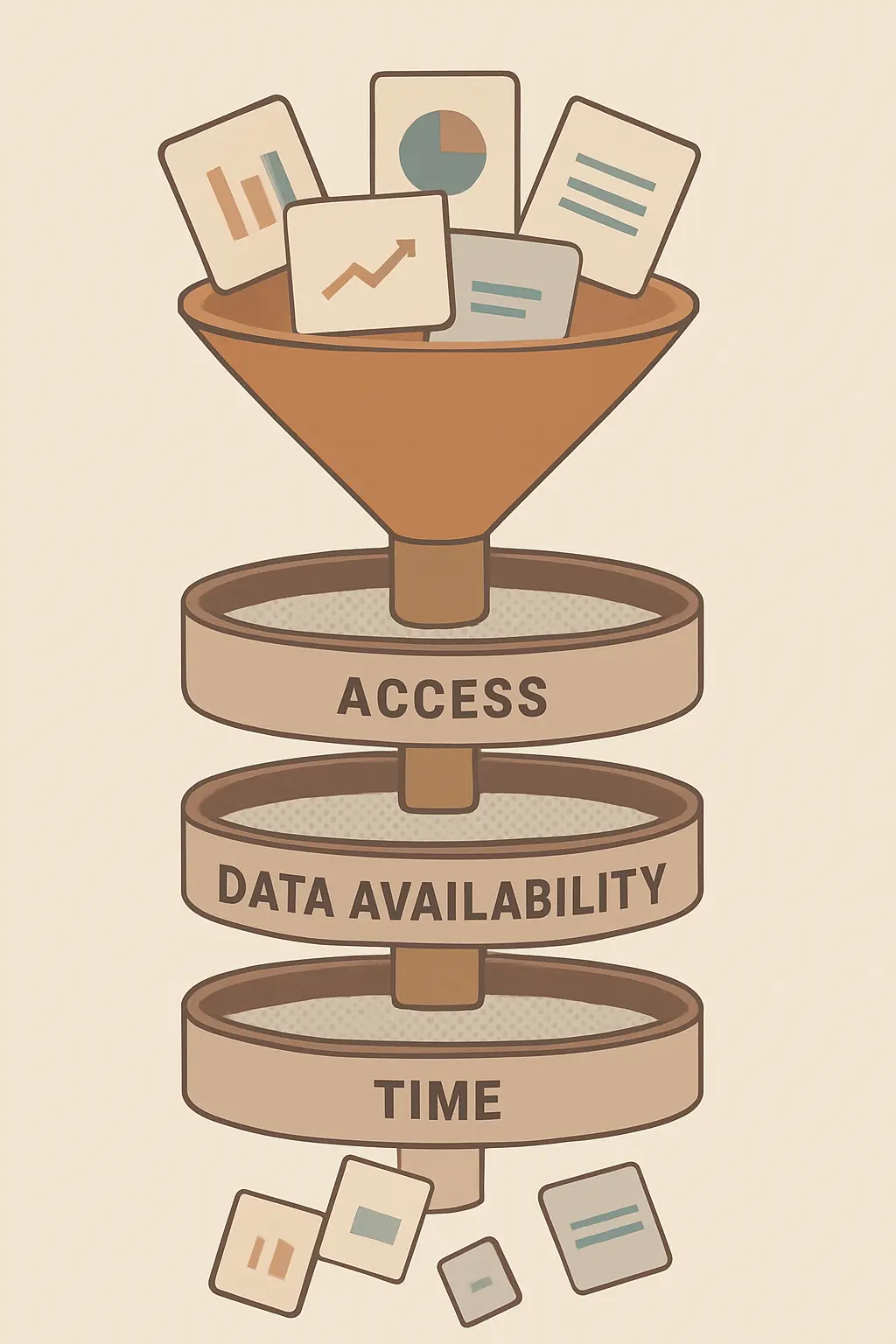
Before you commit, run three checks. Access: whose permission do I need, and how long does that queue take in my province? Data: does the information exist, and may I have it? Time: can this be collected, analysed and written inside my registration period, allowing for school terms and examination periods when schools will not host you?
That last point is specific to education and is routinely forgotten. A data-collection plan that lands in the fourth term or in an examination window is a plan to collect nothing.
Forty topics, with research questions
Each entry gives a topic, a main research question, and the permission it needs. P = provincial education department approval plus school consent. D = DBE research request (officials or departmental data). O = open data or published documents only, no access application. P+ = as P, with parental consent and learner assent because learners are participants.
Early childhood development and Grade R
- Practitioner readiness for the Grade R curriculum. How do Grade R practitioners in [district] describe their preparedness to deliver the curriculum, and what support do they identify as missing? (P)
- Learning through play in practice. To what extent is dedicated free-play time protected in Grade R classrooms in [district], and what constrains it? (P)
- ECD centre infrastructure and registration. What infrastructure and documentation barriers do unregistered ECD centres in [area] report to registration? (P, plus centre consent)
- School readiness assessment practice. Which school readiness assessment practices are used at Grade 1 intake in [district], and how are results acted on? (P)
Inclusive education
- Screening and identification. How do mainstream primary schools in [district] identify learners who may need additional support, and what happens after identification? (P)
- Teacher capacity for inclusion. What professional development have teachers in [district] received for inclusive practice, and how do they rate its usefulness? (P)
- Physical accessibility. To what extent do school facilities in [district] accommodate learners with physical disabilities? (P)
- Transport as an access barrier. What transport arrangements exist for learners with disabilities in [district], and what gaps do caregivers identify? (P, plus caregiver consent)
- District support teams. How do district-based support team members describe their capacity to respond to school referrals? (P)
Teacher development and support
- Mathematics teaching in multilingual classrooms. How do Foundation Phase teachers manage mathematics instruction when learners’ home languages differ from the language of instruction? (P)
- Continuing professional development uptake. Which professional development activities do teachers in [district] actually complete, and what predicts completion? (P)
- Mentoring of newly qualified teachers. What induction and mentoring do first-year teachers in [district] receive, and how do they describe its adequacy? (P)
- Subject head capacity. How do departmental heads in secondary schools allocate their time between teaching, administration and instructional leadership? (P)
- Teacher retention in rural schools. What factors do teachers in rural schools in [district] identify as influencing their intention to stay or leave? (P)
- Workload and wellbeing. How do teachers in [district] describe the relationship between administrative workload and their capacity to prepare lessons? (P)
Curriculum, assessment and learning recovery
- Performance disparity within classrooms. How do intermediate-phase teachers adapt instruction for a wide spread of attainment in a single class? (P)
- Learning recovery strategies. Which catch-up strategies have been implemented in [district] schools, and how do teachers evaluate them? (P)
- School-based assessment moderation. How is school-based assessment moderated in [subject] in [district], and what inconsistencies do moderators report? (P)
- Formative assessment practice. What use do teachers make of formative assessment information in planning subsequent lessons? (P)
- Progression and repetition. How do published progression and repetition patterns vary across [defined set of schools or districts]? (O)
- Curriculum coverage. How much of the prescribed annual teaching plan is covered in [subject and phase] in [district], and what accounts for shortfalls? (P)
Language and reading
- Reading benchmarks in practice. How do Foundation Phase teachers use early grade reading benchmark information, where they have it? (P)
- Home language to English transition. How do Grade 4 teachers support learners through the change in language of learning and teaching? (P)
- Reading material availability. What reading material in learners’ home languages is available in [district] schools, and how is it used? (P)
- Parental involvement in reading. What reading support do caregivers in [area] provide at home, and what would enable more? (P, plus caregiver consent)
- Reading policy documents compared. How do national reading policy documents published over [period] frame the causes of low reading attainment? (O)
Technology in education
- Device access and use. What digital devices are available for teaching in [district] schools, and how are they used in practice? (P)
- Teacher digital confidence. How do teachers in [district] rate their confidence with the digital tools their school provides? (P)
- Connectivity as a constraint. How does school connectivity in [district] constrain the use of digital learning material? (P)
- Generative AI and school assessment. How do secondary school teachers in [district] describe the effect of generative AI tools on how they set and mark written work? (P)
- Learner management system use. How is the school administration system used in [district], and what do administrators identify as friction? (P)
Leadership, governance and infrastructure
- School governing body functionality. How do governing body members in [district] describe their role in school financial oversight? (P)
- Principal instructional leadership. How do primary school principals in [district] allocate time to classroom observation and feedback? (P)
- School infrastructure conditions. What does published infrastructure data show about [named facility type] provision across [province]? (O)
- School nutrition programme implementation. How is the school nutrition programme administered at school level in [district], and what constraints do coordinators report? (P)
- Learner safety. What safety measures are in place at [district] schools, and how do staff assess their adequacy? (P)
Transition out of school
- Subject choice and post-school options. How do Grade 9 learners in [district] make subject choices, and what information informs them? (P+)
- Career guidance provision. What career guidance is provided in [district] secondary schools, and by whom? (P)
- Post-school destinations. What do published datasets show about the destinations of school leavers in [province] over [period]? (O)
- Preparedness for post-school study. How do first-year students at [institution] describe their school preparation for tertiary study? (institutional ethics only, no PED approval needed)
Turning a topic into an approvable proposal
A topic is a direction. What your committee approves is a problem, a question and a method. Take your chosen entry and work through the problem statement examples, then write objectives whose verbs match what you can actually do, and define your target and accessible population honestly — which in education is usually determined by the permission you obtained rather than the one you wanted.
The whole sequence sits inside the South African research proposal guide, and if your study touches learners at all, start the ethics clearance conversation in the same week you settle the topic. For where to find the published figures behind your background chapter, see nine education datasets with the numbers, and the education mini-dissertation methodology chapter takes it from there.
Frequently asked questions
Do I need DBE permission to research in a school?
No. The DBE states that it does not grant permission for research in schools, districts or provincial education departments. You apply to the relevant provincial education department, and the DBE publishes a contact list for that purpose.
What order do the approvals go in?
Institutional ethics clearance first, then the provincial education department, then the school principal. Provincial applications commonly require the ethics clearance letter as an attachment.
How long does provincial approval take?
It varies by province and we are not going to quote a number we have not read. Ask your supervisor how long it took the last few students in your department, and build that into the timeline.
Can I avoid the approval process altogether?
Yes, by choosing a topic that uses only published documents and datasets. The entries marked O above are of that kind, and they are not lesser projects.
Do I need parental consent for research with learners?
Where learners are participants, expect to need caregiver consent and learner assent in addition to the other approvals. Your ethics committee will specify the form.
Is aligning to the DBE research agenda required?
Not required, and the agenda itself says researchers are not restricted to its sub-questions. It is a strategic choice: alignment makes relevance easy to argue.
Where can I read what has already been done?
The DBE research repository holds departmental and commissioned research organised by theme, with abstracts and downloadable reports. It is a good first check that your topic is not already answered.
Can I research my own school?
Often yes, with the same approvals, but declare the insider position and address the power relationship explicitly in your ethics application and your limitations.
How narrow should an M.Ed topic be?
Narrow enough that one district, one phase or one subject can carry it. Almost every over-scoped education dissertation is over-scoped in the same way: too many schools.
Can I change topic after my proposal is approved?
Refinement is normal. A substantive change of question, population or method usually needs re-approval and may need fresh ethics clearance and a new provincial application.
Pick one and start the proposal
The topic is the cheapest decision in the degree and the one students spend longest on. Pick the one whose permissions you can actually obtain, and start writing. Tesify helps you turn a topic into a structured proposal, with the research staying 100% written by you.