
| Marketing research design | Tool | What it adds beyond generic stats software | Cost signal |
|---|---|---|---|
| Choice-based conjoint / MaxDiff | Qualtrics XM Conjoint module | Purpose-built experimental design and utility-score output | Depends on your institution’s Qualtrics licence — ask the library |
| Brand/consumer-behaviour structural models | SmartPLS | PLS-SEM for small-to-medium samples, widely used in marketing research | Paid licences; free 30-day trial of the Professional version — check current academic options |
| Covariance-based structural models | AMOS (via SPSS) | CB-SEM for confirmatory, theory-testing marketing models | Often bundled with a university SPSS licence |
| Mediation and moderation in a marketing model | PROCESS macro (Hayes) for SPSS | Purpose-built indirect-effect and interaction testing, free add-on | Free |
| Social listening / sentiment analysis | Brandwatch or Talkwalker | Large-scale social media data capture and sentiment tagging | Commercial; check university media/marketing department access first |
| Secondary trend and search-interest data | Google Trends | Free, real-time category and brand search-interest data | Free |
The short answer
Marketing dissertations tend to need one of three tool families the site’s existing comparisons do not cover: a conjoint or MaxDiff design tool if you are studying trade-offs consumers make between product attributes; a structural equation modelling tool if your theoretical framework proposes a multi-construct brand or consumer-behaviour model; or a social listening tool if your data comes from social media rather than a survey. For the general statistics decision between SPSS, R, jamovi and JASP, or the choice between NVivo, ATLAS.ti and MAXQDA for a qualitative brand study, the site’s existing comparisons already cover that ground well — this page picks up where those leave off.
When does a marketing dissertation need conjoint or MaxDiff software specifically?
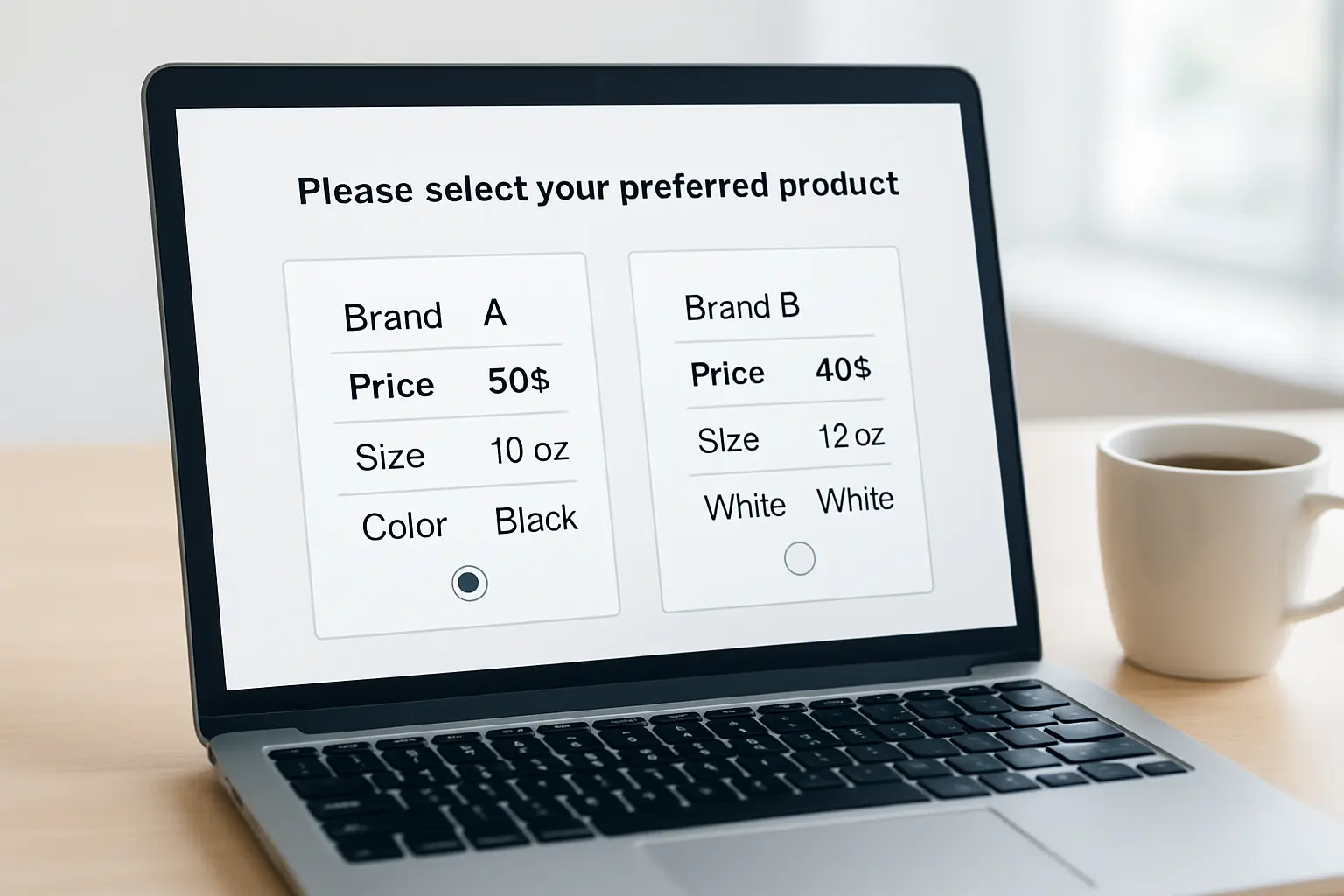
If your research question is about trade-offs — which product attributes South African consumers value most, or how much they would pay for one feature over another — a standard Likert-scale questionnaire cannot answer it well, because it asks about attributes one at a time rather than forcing a choice between them. Qualtrics XM’s conjoint module builds the experimental design (which attribute combinations each respondent sees) and outputs utility scores per attribute level, which a standard survey platform does not do natively. Some South African universities licence Qualtrics institutionally, so check with your library whether the conjoint capability is included before assuming a cost.
When does a marketing model need PLS-SEM instead of standard regression?
If your theoretical framework chapter proposes a multi-construct model — brand trust predicting brand loyalty through perceived value, for instance, with several latent constructs each measured by multiple items — standard multiple regression cannot test the whole model at once, and testing each relationship separately loses the model’s structure. SmartPLS is a common choice for student marketing dissertations because PLS-SEM tolerates the smaller sample sizes typical of a student study better than covariance-based alternatives, and PLS-SEM output is widely used enough in marketing research that examiners generally recognise the format. Where your framework calls for confirmatory, theory-testing structural modelling with a larger sample and normally distributed data, AMOS (run through SPSS) is the covariance-based alternative, better suited to larger samples.
A worked example: which tool fits which part of one study
Consider one illustrative marketing dissertation: the effect of influencer credibility on purchase intention among South African university students, with brand trust as a mediator and social media platform as a moderator — a hypothesis set built the same way the site’s own guide to writing a marketing dissertation’s research problem, questions and hypotheses sets out. This single study plausibly needs three of the tools above at different stages. First, the theoretical model (influencer credibility → brand trust → purchase intention, with platform as a moderating condition) is a multi-construct structural model, tested in SmartPLS because the expected sample size (perhaps 200–300 students) sits comfortably within PLS-SEM’s strengths. Second, the specific mediation path (does brand trust explain the credibility–purchase-intention link) can be tested more simply, as a secondary confirmatory check, with the PROCESS macro once the data is in SPSS format — useful for producing the specific indirect-effect confidence interval a marketing examiner will look for. Third, if the study also wants to triangulate self-reported purchase intention against actual online conversation about the influencer campaign, a lightweight pull from Google Trends on the campaign or influencer name adds a free, secondary data point without the cost of a full social-listening licence. Not every study needs all three; the point of the worked example is that a single research question can call for more than one tool from this page, chosen at different points in the analysis chapter rather than as one single decision.
When does a marketing dissertation need social listening software instead of a survey?
If your research question is about what consumers are actually saying online — sentiment toward a brand during a campaign, or how a crisis unfolded on social media — rather than what they say when asked directly, a survey instrument answers the wrong question. Brandwatch and Talkwalker both capture large volumes of public social media posts and apply sentiment tagging, but both are commercial tools; check whether your marketing or media studies department already holds institutional access before budgeting for one yourself. Google Trends is the free alternative for a narrower question — relative search interest in a brand, category or campaign term over time — and is often sufficient for a secondary-data marketing dissertation that does not need individual post-level sentiment.
What does this cost in rand, realistically?
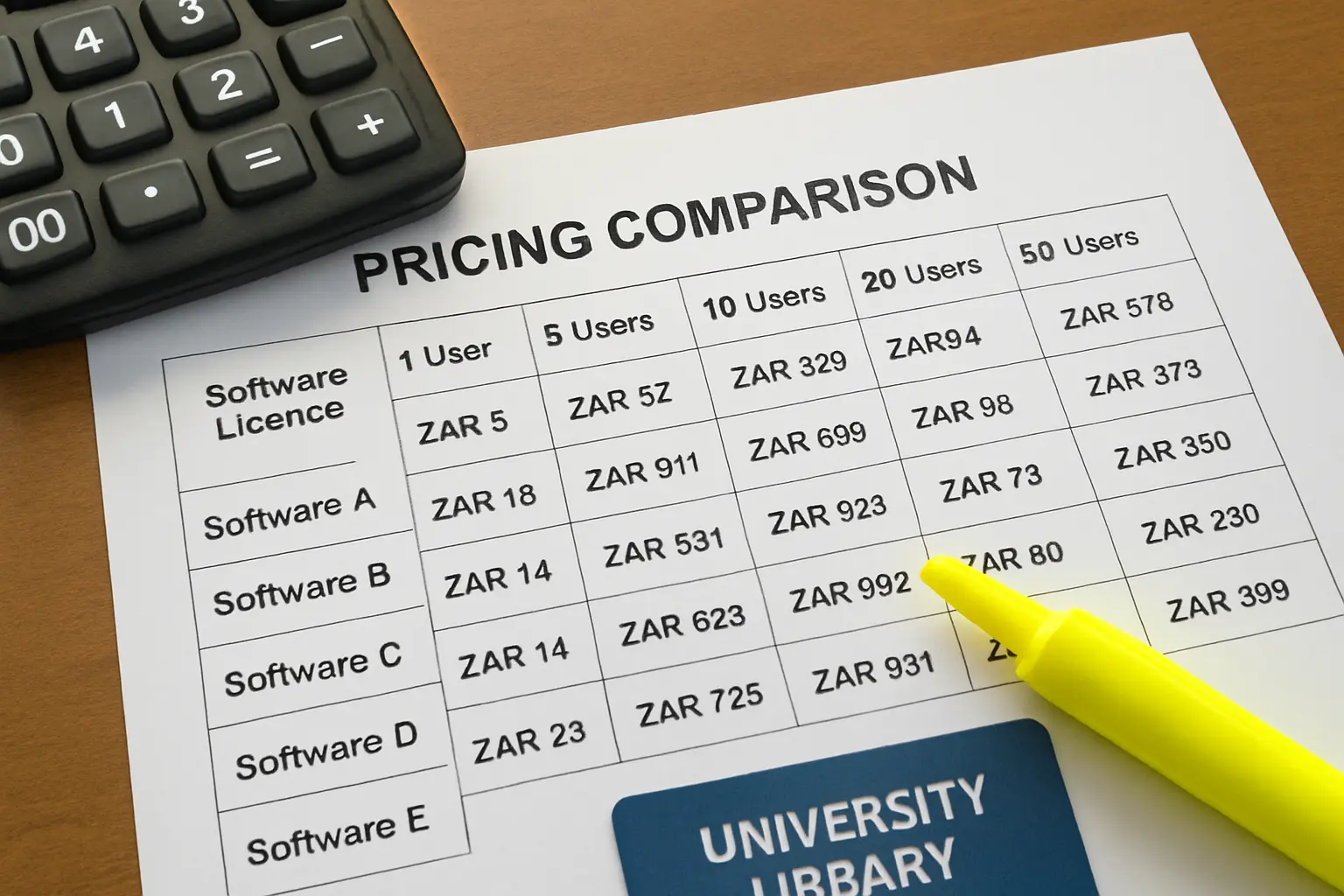
Two of the six tools compared here (PROCESS and Google Trends) cost nothing beyond the SPSS access you already have or a browser; SmartPLS offers a free 30-day trial of its Professional version, so check its current academic options before you plan a whole analysis around it. Whether Qualtrics’s conjoint capability is available to you depends on your university’s own Qualtrics licence, so the real cost question is what your institution already holds, not what it costs per use. Social listening tools are the genuine budget item on this list — they are sold commercially, typically at institutional level and well beyond an individual student’s means, which is exactly why checking departmental access before assuming you need to buy one yourself matters more here than for any other tool on this page.
How does this fit with the generic tool comparisons already on this site?
The site’s SPSS vs R vs jamovi vs JASP comparison and NVivo vs ATLAS.ti vs MAXQDA vs Taguette comparison answer the general statistics-package and qualitative-software questions every discipline faces. This page does not repeat that ground — it answers the marketing-specific question of which specialist tool a particular marketing research design needs on top of, or instead of, that general choice. A marketing dissertation testing simple group differences still needs the general SPSS-family decision; one building a conjoint design or a brand structural model needs this page as well.
Our recommendation
Choose the tool from your research design, not from what a previous student in your department used. A survey-based study testing simple relationships fits the general SPSS/R/jamovi/JASP decision already on this site. A trade-off or willingness-to-pay study needs conjoint or MaxDiff capability. A multi-construct theoretical model needs SmartPLS (suited to smaller samples) or AMOS (suited to larger samples and confirmatory designs). A mediation or moderation hypothesis needs the PROCESS macro. Social-media-sourced data needs a listening tool or, for a lighter-weight secondary study, Google Trends. Whichever combination your design calls for, name the tool and the reason for choosing it explicitly in your methodology chapter — an examiner reading “data was analysed using appropriate software” with no name attached will ask the question this page just answered.
Frequently asked questions
Is SmartPLS free for students?
SmartPLS offers a free 30-day trial of its Professional version; beyond that it is licensed software, so check its own site for any current student or academic options rather than assuming a permanent free tier.
Can I switch from PLS-SEM to CB-SEM partway through my study?
It is possible but costly in time, since the two approaches make different assumptions about your data and sample size — deciding which one your theoretical framework and sample size actually support before data collection avoids this.
Do I need ethics clearance to scrape social media data with a listening tool?
Usually yes, even for public posts — check your faculty’s research ethics committee requirements for social media data specifically, since the rules differ from a standard human-participant survey and POPIA considerations still apply to any personal information captured.
What if my university does not licence Qualtrics or a social listening tool?
Ask your supervisor and your library about institutional access before assuming you must pay personally — many South African universities hold licences a specific department administers rather than a central one, and access is not always obvious from the library homepage alone.
Is PROCESS macro compatible with software other than SPSS?
Hayes has also released versions for R and SAS; the SPSS version is the one most students encounter first, so match whichever your department already uses.
Which tool should a qualitative brand-perception study use?
That question is answered by the site’s existing qualitative software comparison — the choice between NVivo, ATLAS.ti, MAXQDA and Taguette applies to marketing the same way it applies to any qualitative discipline, and this page does not repeat it.
Can Google Trends data alone support a full marketing dissertation?
Rarely as the sole data source — Google Trends shows relative search interest, not absolute volume or purchase behaviour, so it is usually paired with another data source rather than standing alone as the entire empirical chapter.
How do I decide between SmartPLS and simply running the PROCESS macro?
PROCESS tests a specific mediation or moderation relationship between a small number of variables; SmartPLS tests an entire multi-construct structural model at once. If your framework has more than three or four latent constructs connected by multiple paths, SmartPLS is usually the more defensible choice.
Does my supervisor need to approve the specific tool I choose?
Yes — confirm your tool choice with your supervisor before committing significant time to learning it, since departmental convention and examiner familiarity vary, and a tool that is standard in one South African marketing department may be unfamiliar to an examiner from another.
What happens if my sample size turns out too small for the structural model I planned?
PLS-SEM tolerates smaller samples better than CB-SEM, which is one reason it is a common choice at honours and master’s level — if your final sample is smaller than planned, revisit whether your model still meets established minimum sample-size guidance for PLS-SEM before running the analysis, and consult your supervisor if it does not.
Is a conjoint study harder to get through ethics clearance than a standard survey?
Not usually harder, but the information sheet needs to explain the choice-task format clearly, since participants are shown attribute combinations rather than asked direct questions, and an ethics committee unfamiliar with conjoint designs may ask for this to be spelled out more explicitly than for a standard questionnaire.
Should I mention the tool name in my dissertation title or just in the methodology chapter?
The methodology chapter is where the tool name belongs, with the version number and, for SmartPLS or AMOS, the specific algorithm settings used — titles are reserved for the research question and field, not the software. Tesify can help you draft the methodology chapter that explains your analysis choices once you have settled on a tool.