Key finding: no single South African dataset reports a clean “rural health” figure — the District Health Barometer reports by district, not by a direct rural/urban split, and household surveys such as the General Household Survey report health-care use by the geographic breakdowns each release chooses rather than by a rural definition built for health access. A public health dissertation on rural communities has to build its rural definition from the geographic unit its chosen data source actually uses, not assume one exists ready-made, and state that definition consistently from the population section through to the discussion of findings.
How is “rural” actually defined in the data sources available to you?
Different South African datasets use different geographic units, and none of them map cleanly onto an intuitive “rural” category on their own. The District Health Barometer, published by Health Systems Trust and already covered in the site’s guide to public health data sources in South Africa, reports facility and programme performance indicators at district level — a district can itself be a mix of urban, peri-urban and deeply rural areas, so a district-level figure is not the same as a rural-specific one. Stats SA’s household surveys report indicators by province and by the other geographic categories set out in each release, which can serve as a usable proxy but are not a health-specific rural definition. State explicitly in your methodology chapter which geographic unit your chosen data source actually uses, and why you are treating it as a reasonable proxy for “rural” in your specific study, rather than assuming the term is self-evidently defined the same way across every source you cite.
Where does rural health advocacy and policy data come from?
The Rural Health Advocacy Project (RHAP), a division of Wits Health Consortium, says it works “for equal access to quality healthcare for rural communities,” and it publishes factsheets and other resources specifically on rural health issues. RHAP also runs the TB Accountability Consortium, which it describes as a consortium strengthening advocacy around South Africa’s TB response, and a rural health coalition called the Rural Health Alliance. Its published material is a useful source for context and policy framing on rural health workforce, access and service-delivery issues, though a dissertation should check each specific publication for whether it presents its own primary data or synthesises other sources, and cite accordingly rather than treating every RHAP publication as an original dataset.
How does the District Health Barometer help with a district-level rural comparison?
Where your dissertation compares two or more specific districts — a predominantly rural district against a predominantly urban one, for instance — the District Health Barometer’s district-level indicators give you a consistent basis for that comparison, drawing largely on the same routine District Health Information System (DHIS) data your own facility’s monthly statistics feed into if your fieldwork is facility-based. Check which indicators and which years the edition you cite actually covers before building your comparison around them. Choosing which districts count as “rural” for your comparison is a judgement call you make and justify (population density, distance to a referral hospital, the district’s own classification in provincial planning documents), not a category the Barometer assigns for you.
What designs actually work for rural-community public health research?
Three designs recur in South African public health dissertations on rural communities: a facility-based study set in one or more rural clinics or district hospitals (service utilisation, patient outcomes, staffing); a household or community survey using a defined rural catchment area, often built around a specific health facility’s or ward’s boundaries; and a secondary comparative analysis using district-level data (the Barometer, household surveys) to compare rural and urban or peri-urban districts on a chosen indicator. The uMkhanyakude Health and Demographic Surveillance System in rural KwaZulu-Natal, distributed through DataFirst and already covered in the site’s public health data sources guide, is a further option for a dissertation with a genuinely longitudinal rural research question, though its geographic coverage is limited to that specific site by design.
What access and logistical considerations are specific to rural fieldwork?
Rural fieldwork in South Africa carries practical constraints a metro-based study does not: greater travel distance and time between sites (which affects your realistic fieldwork timeline and budget), less reliable connectivity for any electronic data-collection tool, and a facility gatekeeper chain that may involve a smaller staff complement with less capacity to accommodate an external researcher’s requests without disrupting service delivery. Build these constraints into your methodology chapter explicitly — a realistic fieldwork timeline that accounts for travel, an offline-capable data-collection method where connectivity is uncertain, and a facility-access plan that respects a rural clinic’s limited staffing capacity, rather than assuming urban-study logistics transfer unchanged. Load-shedding and mobile-data cost, both already covered elsewhere on this site for dissertation work generally, are worth naming again specifically here, since a rural site is more likely to face longer outage windows and weaker signal than a metro campus, and a data-collection plan built assuming reliable connectivity can lose an entire field visit to a single bad day.
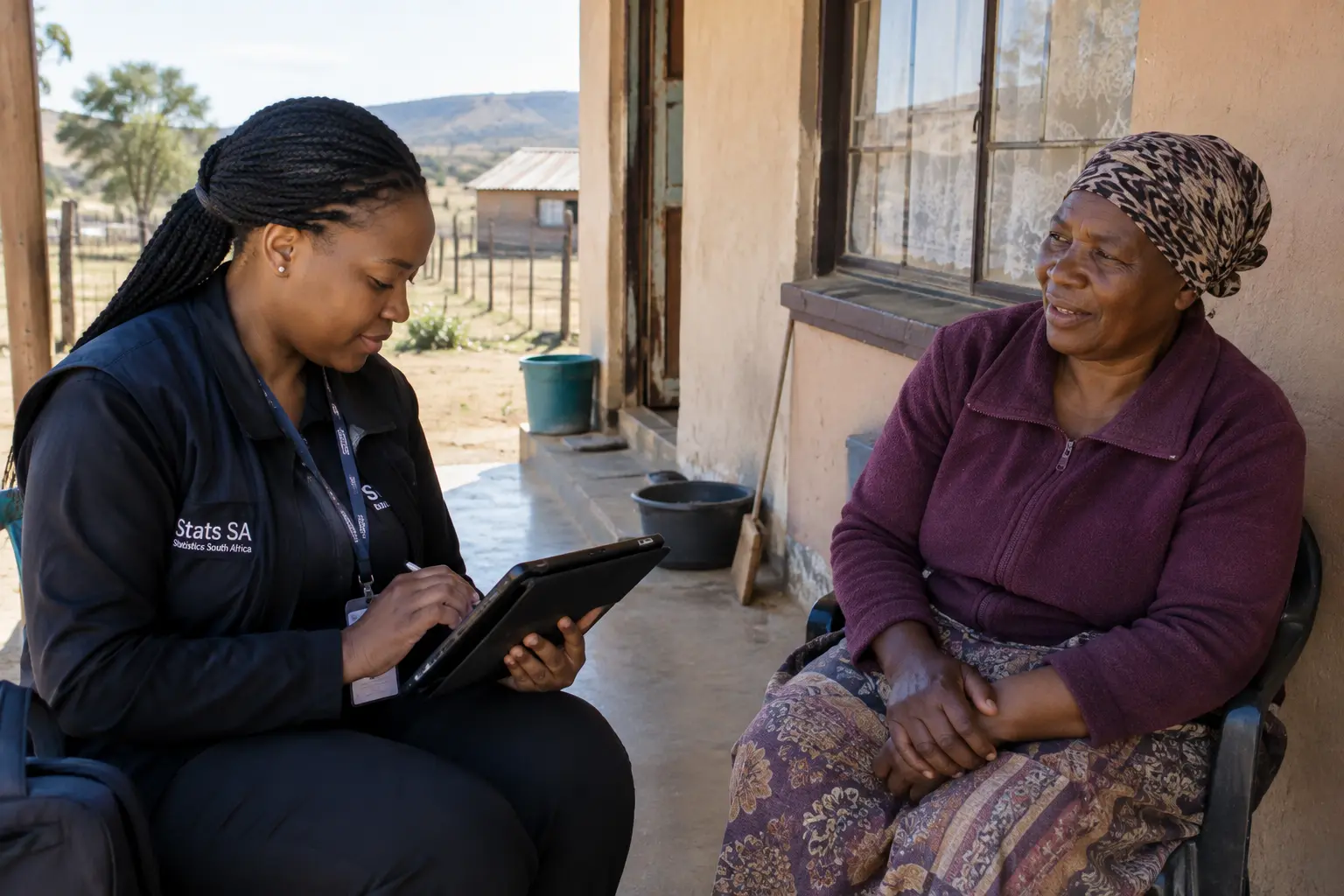
What about the routine District Health Information System (DHIS) your own facility already submits to?
If your fieldwork is set inside a specific rural facility, that facility’s own monthly DHIS submissions — the routine reporting system the District Health Barometer draws on — are often the most directly accessible primary data source for your own site, since they already exist and do not require new data collection. Requesting access to your own facility’s historical DHIS records, with the appropriate facility and provincial department permission, gives you a longer time series than a new prospective data-collection exercise could realistically achieve inside a dissertation timeline, though the same caveat applies as elsewhere: DHIS data was collected for routine service management, not for your specific research question, so check its completeness and consistency over your chosen period before relying on it as a primary source.
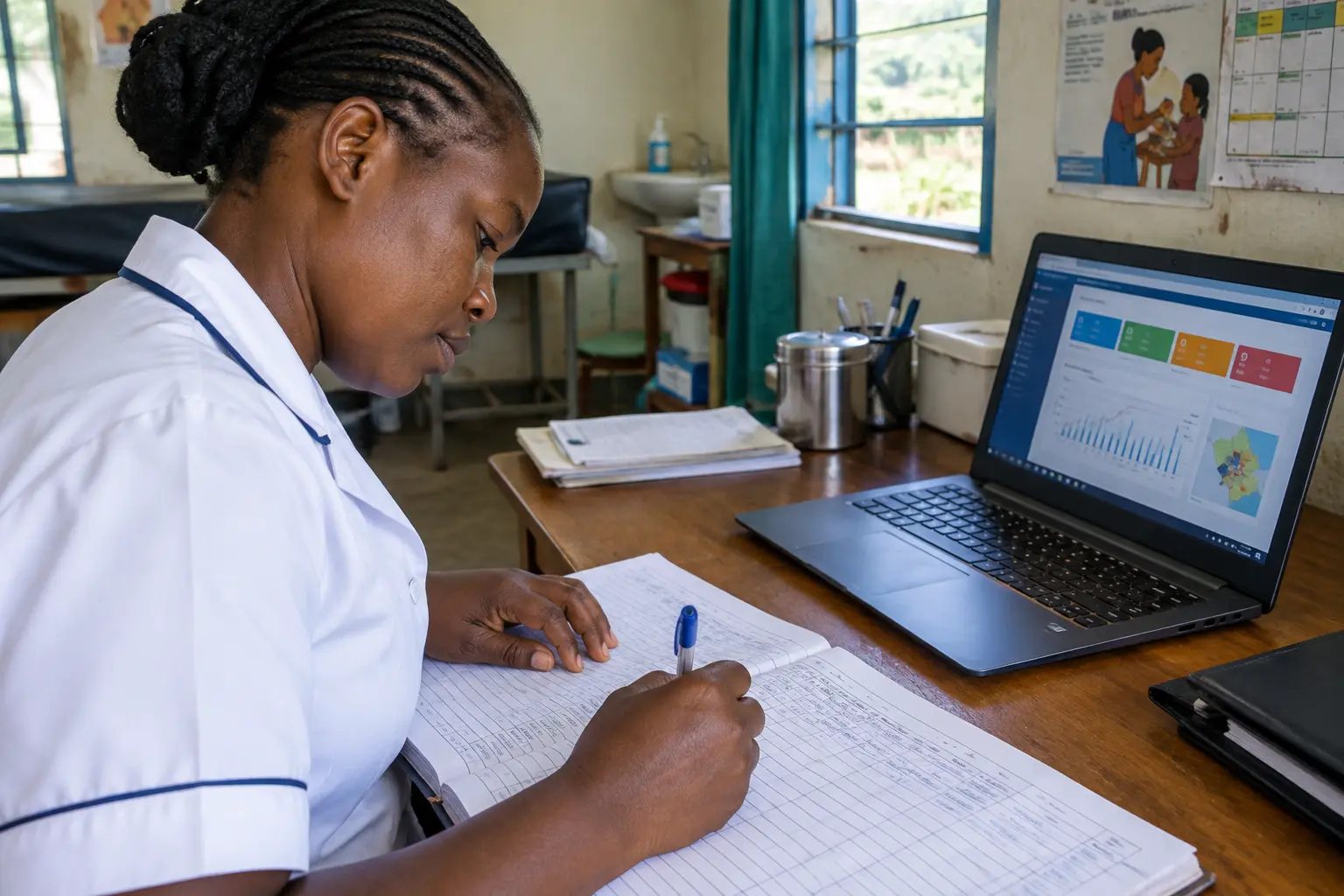
What does a worked population-and-definition paragraph look like?
Illustrative example, not a real study. “The study defined ‘rural’ per the study district’s own classification in its Integrated Development Plan, which designates most of its wards as rural based on population density and distance from the nearest district hospital. District Health Barometer indicators for the study district were compared against a neighbouring district classified as predominantly urban on the same basis. Facility-level fieldwork was conducted at four clinics within the rural wards, selected purposively for a spread of distance bands from the referral hospital, and each clinic’s monthly DHIS records for the preceding two years were extracted with provincial approval.” Every named and numeric detail is illustrative; the structure — naming the specific source of the rural classification, the comparator, the selection logic for facilities within it and the routine data drawn on — is what belongs in any rural-population public health methodology section.
Do household surveys help here?
Stats SA’s General Household Survey, already the source behind the site’s own reporting on household internet and data access statistics, includes questions on health-care use and medical aid cover, and as a household survey it is population-representative, unlike facility-based data, which only captures people who actually reached a facility. A rural-health study asking about access barriers specifically benefits from this household-level view, since a facility-based dataset cannot see the people who needed care and could not reach a facility at all. Check which geographic breakdowns the specific release you cite actually publishes, and treat whichever one you use as a stated proxy for rural status, not a purpose-built rural health classification.
How is this different from the site’s existing public health content?
The site’s guides to public health data sources in South Africa and journals and databases for a public health dissertation cover the national datasets and literature sources generally, without addressing the rural/urban definitional problem specifically. This piece works through that problem directly — what “rural” means in each dataset, and the access and logistical planning a rural-specific study needs that a generic data-sources guide does not cover.
Building a rural-population methods section without losing the definitional argument
Stating a precise, sourced rural definition and carrying it consistently through your sampling, comparison and discussion sections is exactly the kind of structured writing Tesify helps with, while every judgement about your own study area and your own findings stays yours and the dissertation stays 100% written by you. Draft your population and methods section with Tesify.
Frequently asked questions
Is there a single official definition of “rural” used across all South African health data?
No — different sources use different geographic units (district, municipality, ward), and none maps directly onto a health-specific rural category. State which classification your chosen source uses and justify treating it as your study’s rural definition.
Can I use the District Health Barometer to make a claim specifically about rural health?
Only by comparing districts you have classified as predominantly rural against others, since the Barometer itself reports at district level, not a rural/urban split; state your district-classification method explicitly.
Is RHAP a primary data source or a policy and advocacy organisation?
Primarily policy and advocacy — check each specific RHAP publication for whether it presents original data or synthesises other sources, and cite it accordingly rather than treating every report as a primary dataset.
How do I budget realistic fieldwork time for a rural study compared to an urban one?
Add explicit travel time between sites to your fieldwork timeline, and build in buffer for connectivity or logistical delays a metro-based study would not face; state this reasoning in your methodology chapter rather than using a generic timeline template.
Does the uMkhanyakude HDSS cover my specific rural study area?
Only if your study is set in or near uMkhanyakude, rural KwaZulu-Natal, since its coverage is geographically limited to that specific site by design; it is not a general national rural dataset.
Should I use population density or distance-to-facility as my rural classification criterion?
Either is defensible, and some studies use both; the important step is stating which criterion you used, its source (a district’s own planning document, Stats SA’s classification, or your own operational definition), and applying it consistently across your sample.
Do rural facilities need a different ethics-approval process than urban ones?
The core NHREC-to-facility gatekeeper chain is the same, but a rural facility may have a smaller staff complement managing the approval process, which can extend the timeline; build this into your planning rather than assuming the same turnaround as a large urban hospital.
Can I request my own facility’s DHIS data without a separate provincial department application?
Usually not — even where the facility manager is supportive, provincial Department of Health approval for research use of routine data is typically a separate step from day-to-day clinical access, so confirm the specific requirement with your provincial research office before assuming facility-level permission is sufficient on its own.
Is a rural-urban comparison always the right design, or should I study one rural site in depth instead?
Both are legitimate, depending on your research question — a comparison design answers whether and how rural and urban settings differ, while a single-site in-depth design can capture detail a comparison across many districts would flatten. Choose based on what your question actually asks, not on which design seems more straightforward to source data for.